Popcorn Ceiling Removal in Davenport, IA — Residential & Commercial Popcorn Ceiling Removal Specialists
Textured ceilings scraped, repaired, reskimmed and finished smooth across Davenport and the Quad Cities. On anything built before the mid-1980s, the ceiling gets tested before a scraper touches it.
Popcorn Ceiling Removal in Davenport, IA
Davenport Elite Drywall is your local resource for popcorn ceiling removal throughout Davenport and the Quad Cities. We work with experienced drywall professionals who scrape, reskim and finish ceilings smooth once testing has cleared the work to proceed.
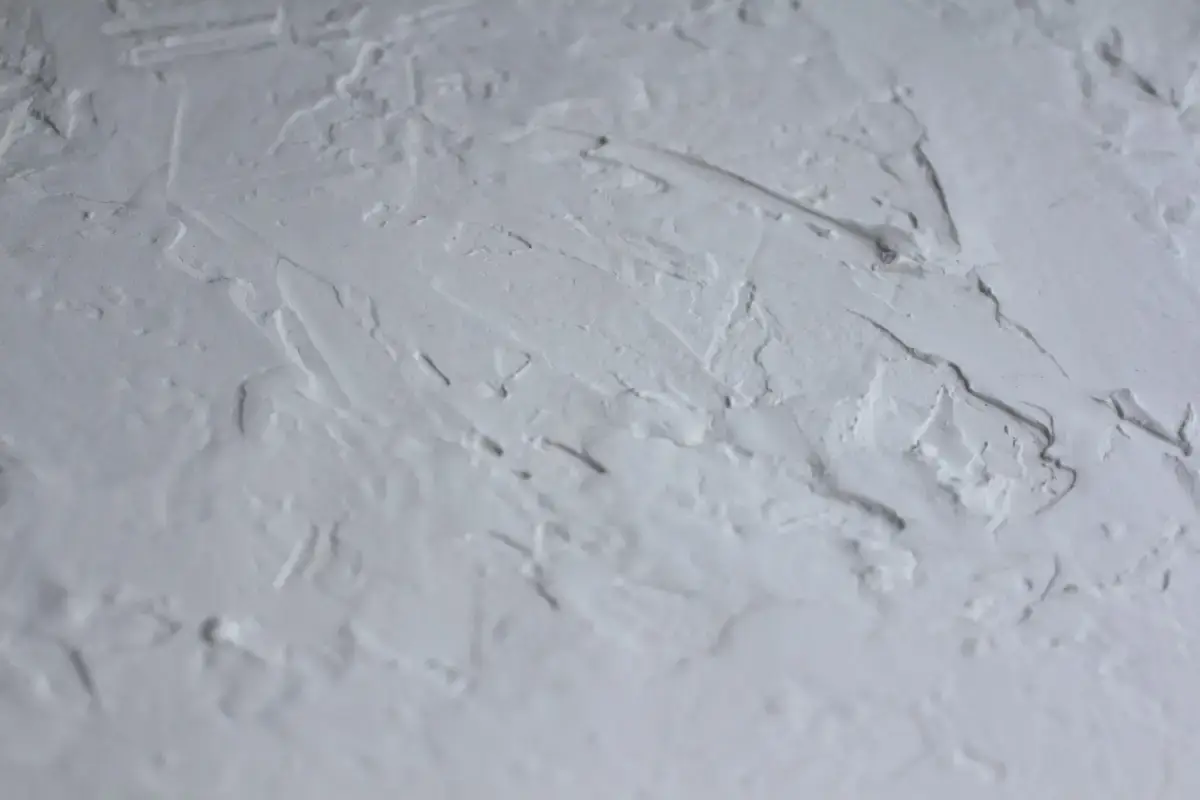
Popcorn ceiling — also called acoustic or stipple ceiling — was sprayed onto residential ceilings from roughly the 1950s into the 1980s. It hid imperfect finishing, absorbed a little sound, and went on fast. It has been out of fashion for decades, and removing it is one of the most requested single changes in an older house because a smooth ceiling makes a room read as considerably more modern than new paint ever will.
There is a step before any of that, and it is not optional. The EPA banned spray-applied asbestos-containing texture in 1978 under the Clean Air Act, but existing stock remained legal to install — so material sprayed into the mid-1980s can still contain asbestos. Treat 1950 to 1986 as the regulated window. Any ceiling in that range is tested before it is disturbed, and the result, not the calendar, sets the schedule.
Once testing clears it, removal is straightforward but messy work, and what comes after matters as much as the scraping. A scraped ceiling is rarely a finished ceiling — the surface underneath is usually a Level 1 or 2 finish that was never meant to be seen, so skimming and finishing is most of the job.
What’s Included in a Davenport Popcorn Ceiling Removal Quote
- Asbestos testing arranged before any disturbance on pre-1986 ceilings
- Room fully contained and sheeted — floors, walls, fixtures and doorways
- Fixtures removed or dropped and covered, electrical made safe
- Texture softened and scraped without gouging the board underneath
- Board damage, torn paper and old fastener pops repaired after scraping
- Full skim coat over the ceiling, because the surface underneath was never a finished one
- Sanded and checked under raking light, which ceilings show more than walls
- Primed and left paint-ready, with debris bagged and removed
Popcorn Ceiling Removal in Davenport, IA
Popcorn Ceiling Texture Removal
The scraping itself, done after testing has cleared the material and the room is fully contained. Unpainted texture is misted with water, left to soften, and taken off with a wide scraper in controlled passes — the aim is removing the texture without gouging the paper face of the board beneath, since every gouge becomes repair work later. Texture that has been painted over is the harder case: paint seals the surface so water cannot penetrate, and those ceilings often scrape dry and rough, or are better skimmed over than removed.
Ceiling Surface Preparation
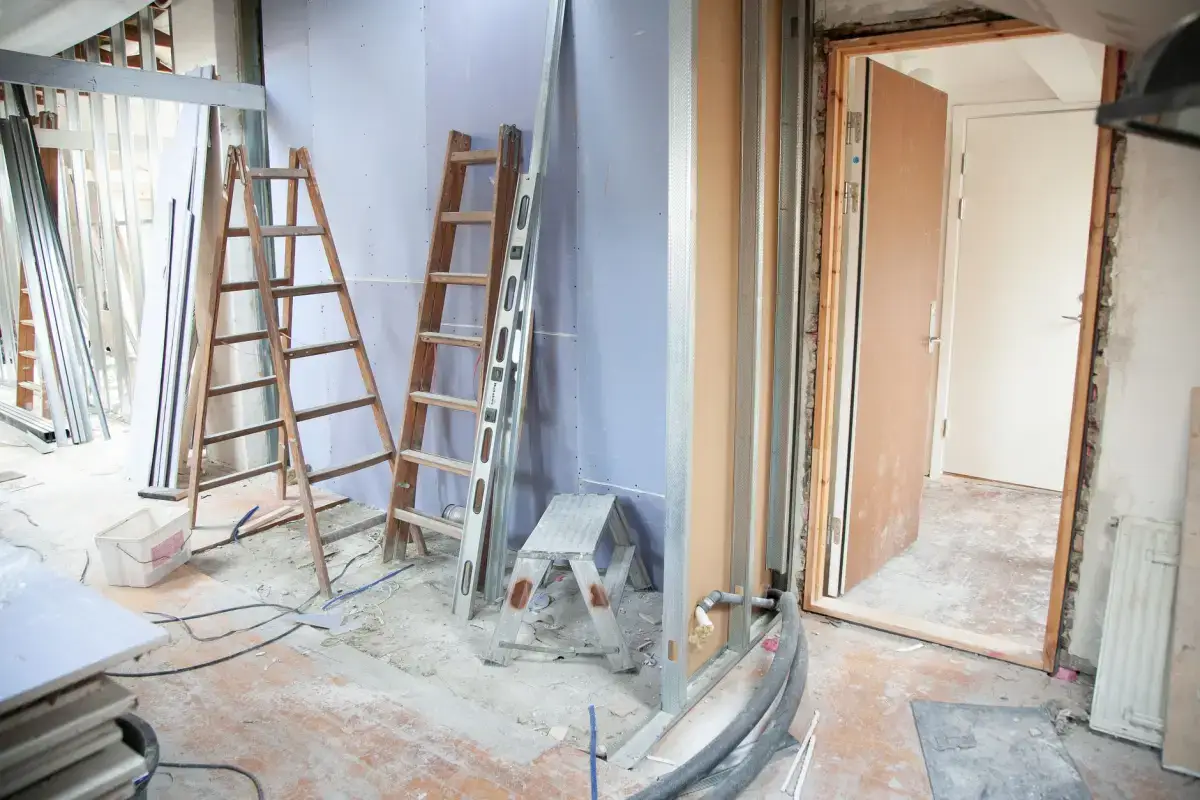
Everything that happens before a scraper is used, and it is most of the setup. Floors get fully sheeted, walls are protected to the top, light fixtures and fans come down or are dropped and bagged, and circuits are made safe because this is wet work under electrical boxes. Doorways to the rest of the house are sealed. Wet-scraped popcorn falls as heavy sludge rather than dust, which is actually easier to control than sanding — but only if the containment went up first.
Ceiling Drywall Repair After Texture Removal
What the texture was hiding. Popcorn was frequently sprayed over a Level 1 or Level 2 finish, meaning taped joints with little or no coating and fastener heads barely covered, because nobody expected the surface to be seen. Scraping exposes all of it, along with any torn face paper from the scraper, old nail pops, and seams that were never properly finished. This stage is genuinely part of the job rather than an unwelcome surprise, and any quote that does not allow for it has not done many of these ceilings.
Smooth Ceiling Finishing
The skim coat that turns a scraped ceiling into a finished one. Because a smooth ceiling has no pattern to hide behind and is viewed in flat, diffuse light from across the room, it needs a Level 5 finish — a skim across the entire surface, not just the joints. This is the stage that determines whether the result looks like a deliberate smooth ceiling or like a ceiling somebody scraped. It is also the reason removal costs more than the scraping alone would suggest.
Ceiling Preparation for Painting
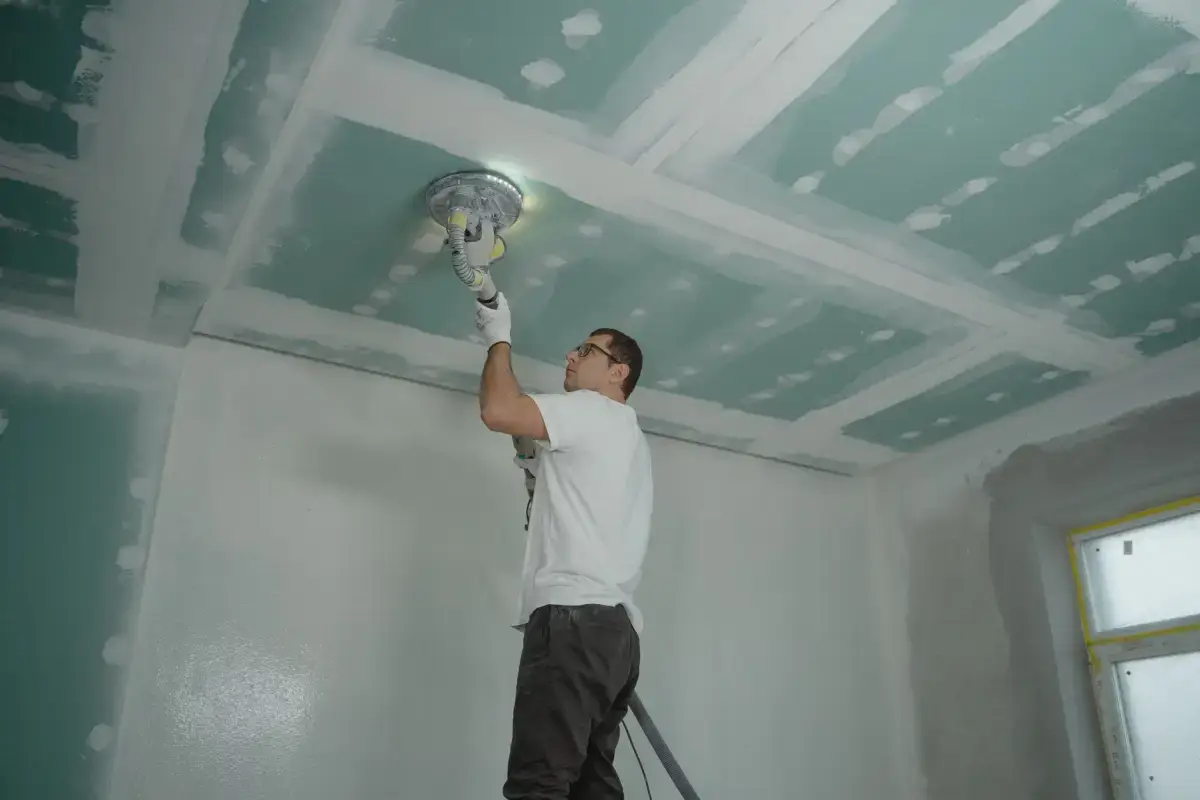
Final sanding, dust removal and priming. Sanding is checked with a work light held low and close, because a ceiling in flat overhead light hides ridges that will appear the moment a lamp is switched on below it. Then the surface is thoroughly dusted, since primer over sanding dust bonds to the dust rather than the board. Primer is not optional on a freshly skimmed ceiling: bare compound absorbs paint far faster than surrounding painted areas, and skipping it produces visible flashing across the surface.
Signs You Need Popcorn Ceiling Removal
- A textured ceiling that dates the room more than anything else in it
- Popcorn texture that is flaking, discolored or shedding onto surfaces below
- Water staining on a textured ceiling that cannot be cleaned or matched
- A room being renovated where the ceiling is the last dated surface left
- Texture damaged by a repair that could not be matched
- A pre-1986 home where you want to know what the ceiling actually contains
How Popcorn Ceiling Removal Works
- 1
Test Before Anything Is Disturbed
For any ceiling that could date from 1950 to 1986, testing comes first and nothing else starts until the result is back. The 1978 EPA ban stopped manufacture of asbestos-containing spray texture but allowed existing stock to be used, which is why ceilings sprayed into the mid-1980s still fall in scope. Samples can be sent to a lab through a mail-in kit for roughly $30 to $60 per sample, or a professional inspection can be arranged, typically $250 to $750. If the result is positive, this stops being drywall work: licensed abatement handles it, EPA notification requirements apply above 160 square feet of asbestos-containing material, and the cost moves from roughly $1.25 to $3.50 per square foot to somewhere between $3 and $12.
- 2
Contain the Room Completely
Popcorn removal makes more mess than any other drywall service, and it is wet mess, so containment goes further than usual. Floors are sheeted wall to wall, walls are covered to the ceiling line, and doorways to the rest of the house are sealed. Light fixtures and ceiling fans come down or are dropped and bagged, and the circuits feeding them are switched off, because this is water applied directly around electrical boxes. Furniture leaves the room where possible rather than being covered, since scraped popcorn falls as heavy sludge that is much easier to sheet up off a bare floor than to clean off upholstery.
- 3
Mist, Soften, and Scrape
The texture is misted with water and given time to absorb — usually ten to fifteen minutes — which softens it enough to come away in sheets rather than dust. Scraping is done with a wide blade held at a shallow angle, taking off the texture without digging into the paper face of the board underneath. Working in manageable sections keeps the misting and scraping in step, since texture that dries out again has to be re-wetted. Painted-over popcorn resists this entirely, because the paint film stops water reaching the material, and on those ceilings skimming over the texture is often a better outcome than fighting it off dry.
- 4
Repair, Skim, Sand, and Prime
With the texture gone, the true condition of the ceiling is visible for the first time — usually taped joints with minimal coating, exposed fastener heads, and any paper torn during scraping. All of that is repaired, then the entire ceiling is skim coated to a Level 5 finish, because a smooth ceiling in flat light has nothing to hide behind. The skim is sanded flush without cutting into the paper and checked with a work light held low and close, which is the condition that finds ridges the room lighting conceals. The surface is dusted down and primed, leaving it genuinely paint-ready rather than merely scraped.
What Does Popcorn Ceiling Removal Cost in Davenport, IA?
- Ceiling area, and whether it is one room or a whole floor
- Whether the texture has been painted over, which makes it far harder to remove
- Asbestos testing, and abatement cost entirely if the result is positive
- Condition of the board underneath once the texture is off
- Ceiling height and whether staging is needed
- How much furniture and fixture removal the space requires
- Whether a full Level 5 skim is needed, which on a scraped ceiling it almost always is
| Service | Cost Per Sq. Ft. | Typical Job |
|---|---|---|
| New Drywall Installation | $1.50 – $3.00 per sq. ft. | $1,000 – $3,254 per project |
| Small Patch or Hole | $75 – $350 per patch | $300 – $500 for a contractor visit |
| Larger Wall Repair | $500 – $800+ per patch | Scales with how much board comes out |
| Ceiling Repair | $297 – $472 per hole | $220 – $1,300 for the full ceiling |
| Water-Damaged Drywall | $500 – $2,500+ | Depends how far the moisture traveled |
| Texture Matching | $150 – $450 per patch | Runs 30 – 40% above a smooth finish |
Based on 2026 national cost-guide data from Angi, HomeGuide, and Homewyse. Quad Cities rates land above or below these ranges depending on ceiling height, access, texture type, and how much board has to come out before new board goes back in. Water damage is the widest range on the table because the scope isn't known until the wall is opened. You get a firm number after someone sees the job.
Where asbestos is not present, guides put popcorn removal at roughly $1.25 to $3.50 per square foot. A positive test changes the job entirely: licensed abatement runs about $3 to $12 per square foot, and EPA notification requirements apply above 160 square feet of asbestos-containing material. Testing itself is cheap by comparison — $30 to $60 for a mail-in sample, $250 to $750 for a professional inspection — which makes it a poor place to economize. The other figure people underestimate is the skim coat: scraping is roughly a third of the labor, and finishing the exposed surface is the rest.
What to Look for in a Davenport Popcorn Ceiling Removal Contractor
Testing Is Non-Negotiable, Not a Suggestion
Anyone willing to start scraping a pre-1986 ceiling without a lab result is telling you how they treat the rest of the job. The result sets the schedule and there is no version of this where it is skipped.
The Quote Includes Skimming, Not Just Scraping
The surface under popcorn was never meant to be seen and is usually a Level 1 or 2 finish. A quote priced only for removal will grow, because the finishing was always going to be necessary.
They Ask Whether the Texture Has Been Painted
Painted popcorn resists water and scrapes badly, and sometimes skimming over it is the better outcome. Someone who asks that question before quoting has met the problem before.
Containment Is Described in Detail
This is the messiest work in the trade and it is wet. Floors sheeted wall to wall, walls covered, fixtures down, circuits off, doorways sealed — that should be described to you rather than improvised on the day.
Residential & Commercial Popcorn Ceiling Removal
Residential
Residential removal is the overwhelming majority of this work and usually happens room by room or floor by floor rather than all at once, because a contained room is unusable while the work runs. Davenport's mid-century housing is the core of it — the era when this texture went up almost universally — which is also exactly the era that requires testing first.
Commercial
Commercial popcorn removal turns up in older converted residential buildings, small offices and rental properties. The additional consideration is documentation: property managers and owners generally need the test result on file, and where a ceiling forms part of a rated assembly the finish has to be restored to specification rather than just made smooth.
When Popcorn Ceiling Removal Isn’t the Right Call
- Anyone who wants the ceiling scraped this week in a home built before the mid-1980s. Testing comes first and the result drives the timeline.
- A ceiling that tests positive for asbestos. That is licensed abatement work with its own regulatory requirements, and it is not a drywall job.
- A textured ceiling with active water staining. Whatever put the water there is fixed first, or the new smooth ceiling stains too.
- Anyone hoping to avoid the skim coat to save money. A scraped-but-unskimmed ceiling looks worse than the popcorn did, and it is not a finish anyone is happy with.
- Addresses outside the Quad Cities.
Serving Nearby Cities
Each city below has its own page, because what is behind the wall genuinely changes across the river. Housing age swings hardest: about a third of Rock Island’s housing predates 1940 against roughly 5% of Bettendorf’s, which decides whether a job starts as plaster work or board work before anyone measures anything.
Frequently Asked Questions
- Does my popcorn ceiling contain asbestos?
- The only way to know is a lab test. The EPA banned spray-applied asbestos texture in 1978, but existing stock stayed legal to install, so material sprayed into the mid-1980s can still contain it — treat 1950 to 1986 as the window that needs testing. A mail-in sample kit runs about $30 to $60, professional testing $250 to $750. Given what it protects against, it is the cheapest part of the project.
- What happens if the test comes back positive?
- The work moves out of drywall and into licensed asbestos abatement, which has its own containment protocols, disposal requirements and regulatory notification — the EPA requires notification before disturbing more than 160 square feet of asbestos-containing material. Cost rises from roughly $1.25 to $3.50 per square foot to somewhere between $3 and $12. The other legitimate option is to leave it alone: undisturbed asbestos-containing texture in good condition can be encapsulated or covered rather than removed.
- Why does the ceiling need skimming after the popcorn comes off?
- Because the surface underneath was never intended to be seen. Builders sprayed popcorn over a Level 1 or Level 2 finish — taped joints with minimal coating, fastener heads barely covered — precisely because the texture would hide it. Scraping exposes all of that. A smooth ceiling is viewed in flat light from across a room and needs a Level 5 skim to look right, which is why finishing is the larger share of the job.
- Can painted popcorn ceilings be removed?
- They can, but it is significantly harder and costs more. Paint seals the texture so water cannot soak in and soften it, which means dry scraping — slower, dustier, and much more likely to tear the paper face of the board underneath. On heavily painted ceilings, skimming over the texture to bury it is often the better result and sometimes the cheaper one. That call is made after looking at the actual ceiling.
- How long does removing a popcorn ceiling take?
- For a typical room, several days rather than one, and testing time sits ahead of that. Containment and fixture removal take a half day, scraping a day, then repairs, skim coating and sanding run across multiple dry cycles. The room is unusable while it happens, which is why most people do it room by room or before moving into a house rather than all at once.
- Is it cheaper to cover the popcorn instead of removing it?
- Sometimes, and it is a legitimate approach rather than a shortcut. Options are skimming over the texture or installing new board over the existing ceiling. Covering avoids the mess of scraping entirely and, where the texture tests positive for asbestos, avoids disturbing it at all — which is the safer outcome. It does lower the ceiling slightly and it does need the existing ceiling to be sound and well fastened.
Learn More
- US EPA — Asbestos — federal guidance on asbestos in homes, testing, and what applies before disturbing textured ceilings
- US EPA — Protect Your Family From Asbestos — what homeowners should do before renovating in a home built before 1980
- Gypsum Association GA-214 — why a smooth ceiling needs a Level 5 skim once the texture that was hiding the surface is gone
Need Popcorn Ceiling Removal in Davenport, IA?
Tell us what’s going on and get an on-site estimate — no charge for the visit, and no obligation to book the work.
Get My Free Estimate