Drywall Services in East Moline, IL — Residential & Commercial Drywall Contractors
Residential repair and finishing alongside multifamily and commercial build-out work, in a city whose newest interior square footage is going into a redeveloped riverfront rather than into subdivisions.
Davenport Elite Drywall is your local resource for drywall installation, repair, finishing, and commercial build-out throughout East Moline, IL. We work with experienced drywall professionals who hang, tape, and finish board in Quad Cities homes and commercial spaces every week.
East Moline's housing brackets the plaster-to-drywall changeover almost exactly, which makes the age of the building the most useful thing to establish before anything else. The city grew from 2,665 residents in 1910 to more than 20,000 by mid-century and peaked around 1970. A house from the 1910s or 1920s here is plaster over wood lath; a house from the 1960s is board; and a house from the 1940s or 1950s is frequently both, plaster in the original rooms and board in whatever got added later. Finding three eras of wall in one room is ordinary rather than unusual.
The other half of the work in East Moline is not houses at all. The riverfront redevelopment has put a substantial amount of new commercial and multifamily interior square footage into a city that had not built much of either for decades, and that is metal-stud partition work against an architect's finish schedule rather than anything a homeowner would recognise.
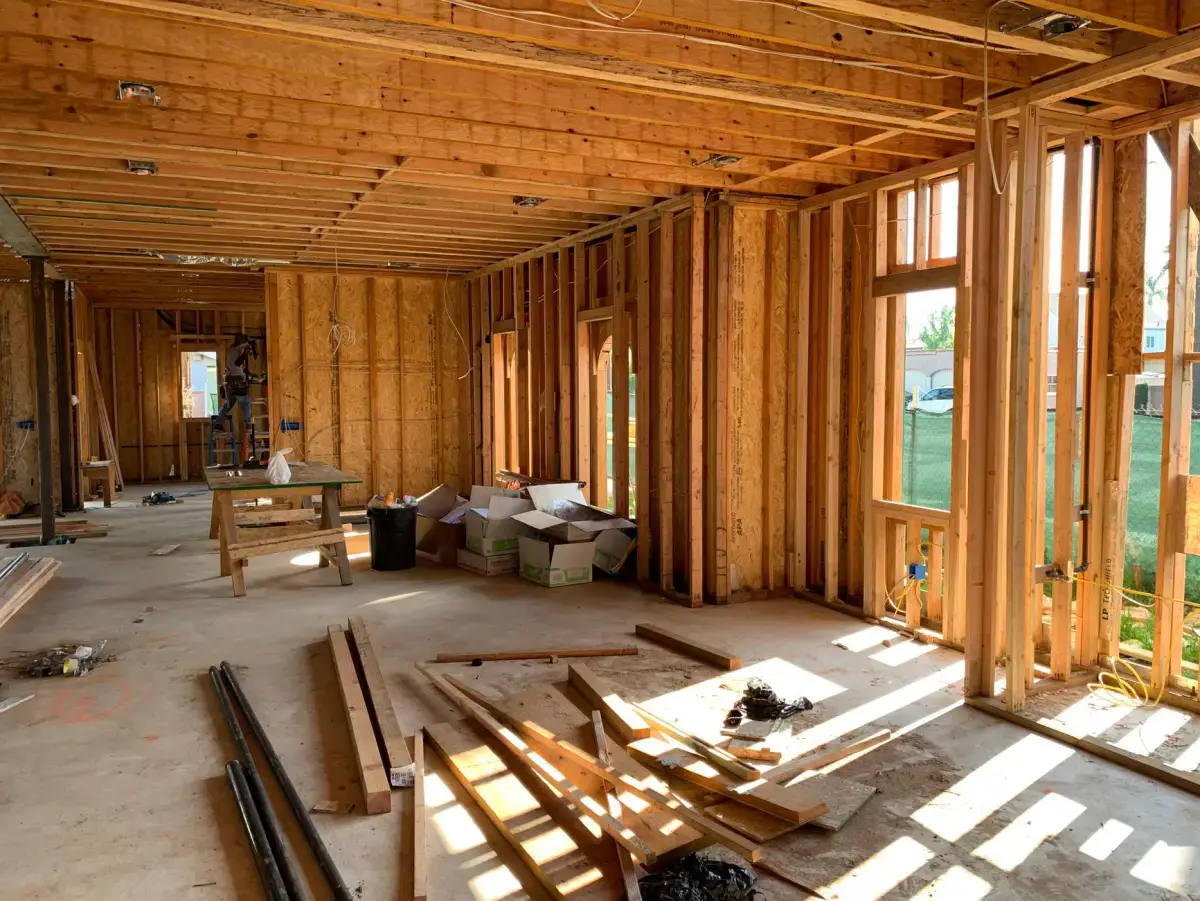
Drywall Services in East Moline, IL
Commercial drywall installation, tenant build-out, and metal stud framing take a larger share of the work in East Moline than in most of the coverage area, alongside ordinary residential repair.
Residential Drywall
The Drywall Process on a East Moline Job
- 1
Walkthrough, Measurement, and Panel Decisions
The job starts with someone in the space measuring square footage and looking at what the room actually is. Ceiling height sets whether panels run 8, 9, or 12 feet and how many butt joints the room will end up with — fewer joints means a flatter wall, so panel length is a quality decision, not just a materials one. Each area is assigned a panel type: standard board for most living space, moisture-resistant where humidity collects or the room sits below grade, and Type X where an attached garage or a shared assembly requires a fire rating. The framing is checked at the same time for plane, plumb, and whether there is backing behind every seam and corner, because board fastened to bowed or unbacked framing telegraphs that bow permanently. Anything that needs furring or shimming gets identified here rather than discovered mid-hang.
- 2
Hanging the Board
Ceilings go up before walls, so the wall panels butt up underneath and help carry the ceiling edge. Panels run perpendicular to the framing, which crosses more members and stiffens the assembly, and seams are staggered rather than stacked so no single line runs the height of a wall. Butt joints land on framing or added backing instead of floating between studs. Screws are set to dimple the paper without tearing through it — a screw driven too deep loses its grip and becomes next winter's pop, and one left proud shows through the finish. Cutouts for boxes, registers, and fixtures are measured and cut as the panel goes up rather than patched afterward, since a tight cutout is easier to finish than an oversized one filled with compound. In East Moline's riverfront multifamily work, that sequencing runs against an inspection calendar for the rated assemblies between units rather than around a household's week.
- 3
Taping, Coating, and Corner Work
Tape is bedded into a first coat of compound over every seam, and corner bead is set on every outside corner to give it a straight, protected edge. Inside corners are taped square. Then come the fill and finish coats, each one wider than the last, feathering the buildup out across the surface so the eye cannot find where the seam stops. Fastener heads get the same treatment, typically three passes. Drying time between coats is not optional and it is most of the calendar on a drywall job — compound coated over material that is still damp shrinks unevenly and cracks later. This is the stage where rushing shows up most visibly, and it is why a room takes days rather than hours.
- 4
Sanding to the Agreed Finish Level
The surface is sanded to the level the room actually needs. A Level 3 is adequate under heavy texture. Level 4 is the standard for walls taking flat or eggshell paint and is what most rooms get. Level 5 adds a skim coat across the entire surface and is the right call under gloss or semi-gloss paint, on a long wall with a window at one end, or anywhere a light source rakes down the surface at a low angle — conditions where anything less will show every seam. Work lights get set at a low angle deliberately during sanding, because that is the condition that reveals imperfections, and finding them then is the whole point. The room is walked before it is called finished.
One Local Drywall Relationship, Not a Bidding War
A phone number and a truck in the driveway don't make a company. Here's what's actually different about ours for a job in East Moline, IL.
The Estimate Is the Price
The itemized number from the walkthrough is the number on the invoice. The professionals we work with don't discover new line items halfway through a job that was already priced.
One Relationship, Not a Bidding War
This isn't a marketplace that hands your address to whoever answers first. The same experienced drywall professional carries the job from the first walkthrough through the final coat.
A Real Look, Not a Phone Quote
A number given over the phone is a guess about what's behind the wall. Framing, existing texture, and how far water actually traveled all change the job, and none of them are visible from a description.
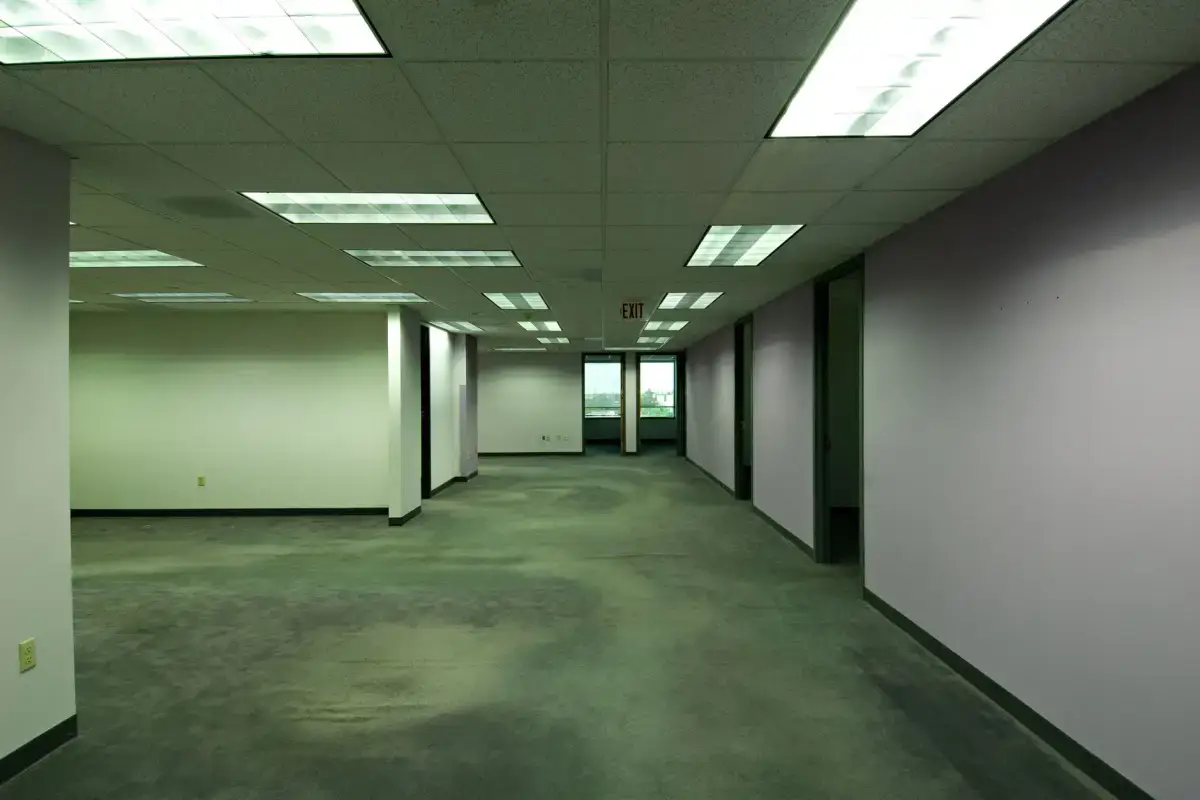
What Drywall Work Looks Like in East Moline, IL
The Riverfront Redevelopment District
A 132-acre stretch of former farm-implement factory land on the Mississippi has been redeveloped under an $80 million plan spread across a decade, adding apartments, a hotel, event and exposition venues, and an outdoor amphitheatre — in what its developers describe as the largest flood-protected area in the Quad Cities. Drywall in that context is commercial and multifamily work: metal stud partitions, rated demising walls between units, sound ratings called out in the project documents, and a finish schedule set by an architect rather than agreed on site. Inspection timing drives the calendar more than the drywall does.
A City Built Between 1907 and 1970
East Moline incorporated in April 1907, decades after Moline and Rock Island were already established cities, and its growth ran through to a peak around 1970 at what is now roughly 21,000 residents. Because that span straddles the point where gypsum board replaced plaster, the construction date is the single best predictor of what is behind a wall. It is also why matching board thickness into an existing wall comes up so often here — a room that has been added onto twice can carry three different wall thicknesses meeting at the same corner.
Water-Damaged Board on the River Side
The Mississippi crested at 22.64 feet on the Rock Island gauge in 2019, just above the 1993 record of 22.63 feet. The relevant fact for drywall is not the crest itself but what gypsum does afterward: board wicks moisture upward well past the visible stain line, so the first job after any wet lower level is finding where the damage actually ends rather than where it looks like it ends. Board that is cut back to the stain and no further stays soft behind the new work. Plumbing repair and mould remediation are separate trades and come first.
Mine Subsidence, and When Drywall Is the Last Step
Rock Island County is one of 34 Illinois counties where mine subsidence coverage is automatically written into property policies unless declined in writing. For a homeowner who has already had movement confirmed, the sequence matters more than the technique: document the crack, settle the structural question and open the claim if there is one, and repair the wall last. Doing the wall first, while the ground is still moving, means doing it twice — and the second repair is not cheaper than the first.
Where This Comes Up Around East Moline, IL
A Factory Town That Outlived Its Factory
The closure of the farm-implement plant that anchored the riverfront was announced in 2000, and the site sat until the current redevelopment took it over. The practical consequence for building trades is that East Moline's newest interior square footage is commercial and multifamily rather than single-family, which is unusual for a city this size and shows up directly in what gets asked for.
The Great River Trail
Part of the Great River Trail, which runs from Rock Island north to Savanna, passes through East Moline along the water. It is a good marker for the river-adjacent band of the city where a finished lower level is worth checking behind before anyone repaints over a stain.
When We’re Not the Right Call
- Addresses outside the Quad Cities — the professionals we work with keep the range tight so the schedule stays honest, and a two-county radius is already as wide as that holds.
- A single sheet of board in a closet you are comfortable hanging yourself. Rent a panel lift for the day and it is a genuinely doable weekend job.
- One nail hole, on its own, at the far edge of the coverage area. A patch that size is not worth anybody's drive across two counties — batch it with the other four you have been ignoring and it becomes one visit worth making.
- Framing that has not passed rough-in inspection yet. Board hung over unapproved electrical or plumbing comes straight back off, and the second hang is on you.
- A wall that keeps cracking along the same line after a proper three-coat repair. That is movement, and until the movement is settled the drywall is the wrong trade to be calling.
Frequently Asked Questions
- Do you serve East Moline, IL?
- Yes. East Moline is about 11.7 miles east-southeast of Davenport, and it is inside the regular coverage area for both residential and commercial drywall work.
- Do you handle commercial and multifamily work in the riverfront district?
- Yes, and it is a meaningful share of the work in East Moline. Multifamily and commercial drywall there means metal stud partitions, rated demising walls between units, and a finish schedule written into the project documents. It gets sequenced against the trades before and after it, and against inspection dates, which is a different kind of scheduling from a house.
- How do I know whether my East Moline house has plaster or drywall?
- Start with the build date. The city grew from 2,665 people in 1910 to over 20,000 by mid-century, so the housing straddles the period when board replaced plaster. Pre-1930 is usually plaster over lath, post-1950 is usually board, and the decades between can be either — or both, if the house has been added onto. It gets confirmed at the walkthrough, because the two repair differently.
- My lower level got wet. How far back does the drywall have to come out?
- Further than the stain, almost always. Gypsum wicks moisture upward well past the visible line, so board cut back only to what you can see leaves soft material behind the repair. The cut line gets set by checking the board above the stain rather than by eye. And the space has to be genuinely dry first — replacing board into a wall that is still wet is the most expensive way to do this job twice.
- How much does drywall work cost in East Moline?
- It depends on square footage, board type, ceiling height, and finish level. National cost guides put drywall installation at roughly $1.50 to $3.00 per square foot all-in, and a small patch at $300 to $500 once a contractor is on site. What those numbers cannot price is framing that is not flat, which is the single most common reason a real quote lands above a calculator estimate. Get an on-site quote for an exact figure — a phone estimate cannot account for framing condition or access.
Learn More
- Gypsum Association GA-214 — the industry standard defining drywall finish Levels 0 through 5, published with AWCI, CISCA, PDCA and the Drywall Finishing Council
- US EPA — Indoor Air Quality: Moisture Control — why gypsum board below grade needs moisture planned for before it is installed, not after
- National Weather Service — Quad Cities — river stages and flood outlooks that affect below-grade work in Davenport
Need Drywall Services in East Moline, IL?
Tell us what’s going on and get an immediate on-site quote — no charge for the estimate, and no obligation to book it.
Get My Free Estimate