Drywall Texturing in Davenport, IA — Residential & Commercial Drywall Texture Specialists
Wall and ceiling texture sprayed, troweled or matched across Davenport and the Quad Cities. Matching an existing finish is the harder half of this trade, and it starts on a scrap panel rather than on your wall.
Drywall Texturing in Davenport, IA
Davenport Elite Drywall is your local resource for drywall texturing throughout Davenport and the Quad Cities. We work with experienced drywall professionals who spray, trowel and match wall and ceiling textures in Quad Cities homes and commercial spaces.
Texture is the pattern applied over finished drywall before paint — orange peel, knockdown, skip trowel, or a deliberate smooth finish. It exists for two reasons. It hides minor surface variation, which is why builders use it as standard on new construction, and it gives a wall a particular character rather than a flat plane. Texture is also the reason a Level 3 finish is acceptable under it: the pattern does work the compound would otherwise have to do.
New texture on a fresh wall is straightforward. The genuinely difficult work is matching what is already there, and that is most of what gets asked for in an existing house. A repair patched perfectly and textured approximately still reads as a repair, because the eye is very good at detecting a change in surface pattern even when it cannot say what changed.
Matching starts with sampling: the existing texture is examined closely, reproduced on a scrap panel, and adjusted for compound thinning, nozzle size and air pressure until the sample matches. Only then does anything touch the wall. Spraying straight onto a repair and hoping is why so many patched walls carry a permanently visible rectangle.
What’s Included in a Davenport Drywall Texturing Quote
- Existing texture identified by type and examined for grain size and coverage density
- Sample sprayed on scrap and adjusted until it matches under a raking light
- Surface underneath brought to the correct finish level before texture goes on
- Compound thinned to the consistency the pattern requires, not by habit
- Masking and containment — spray texture travels a long way from the gun
- Knockdown timed correctly, which is the step that has no second chance
- Texture primed before painting so it does not absorb unevenly
- Overspray cleaned and floors and fixtures protected throughout
Drywall Texture Services in Davenport, IA
Wall Texture Application
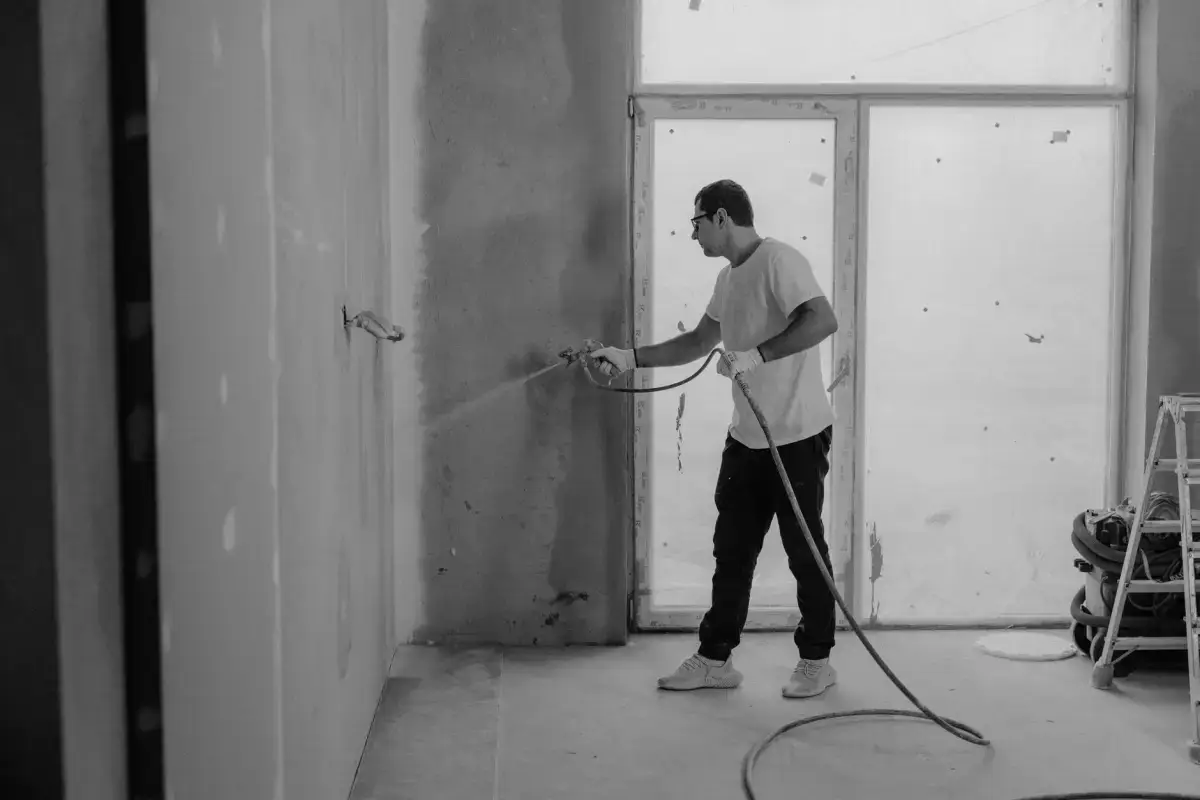
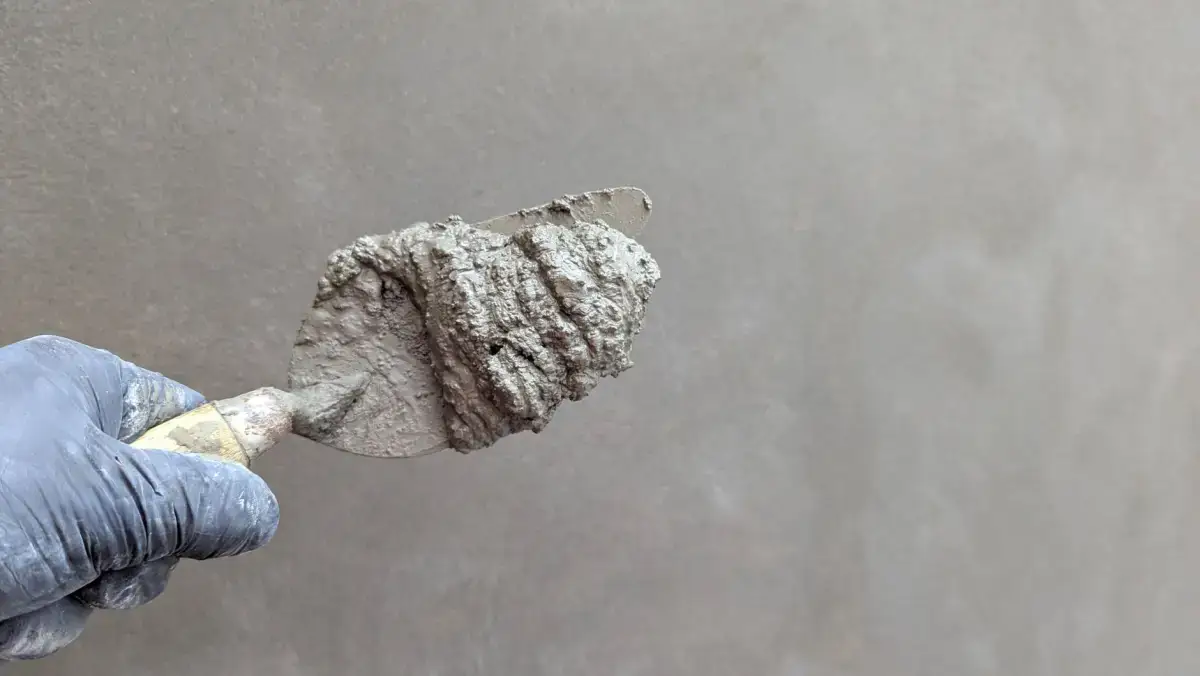
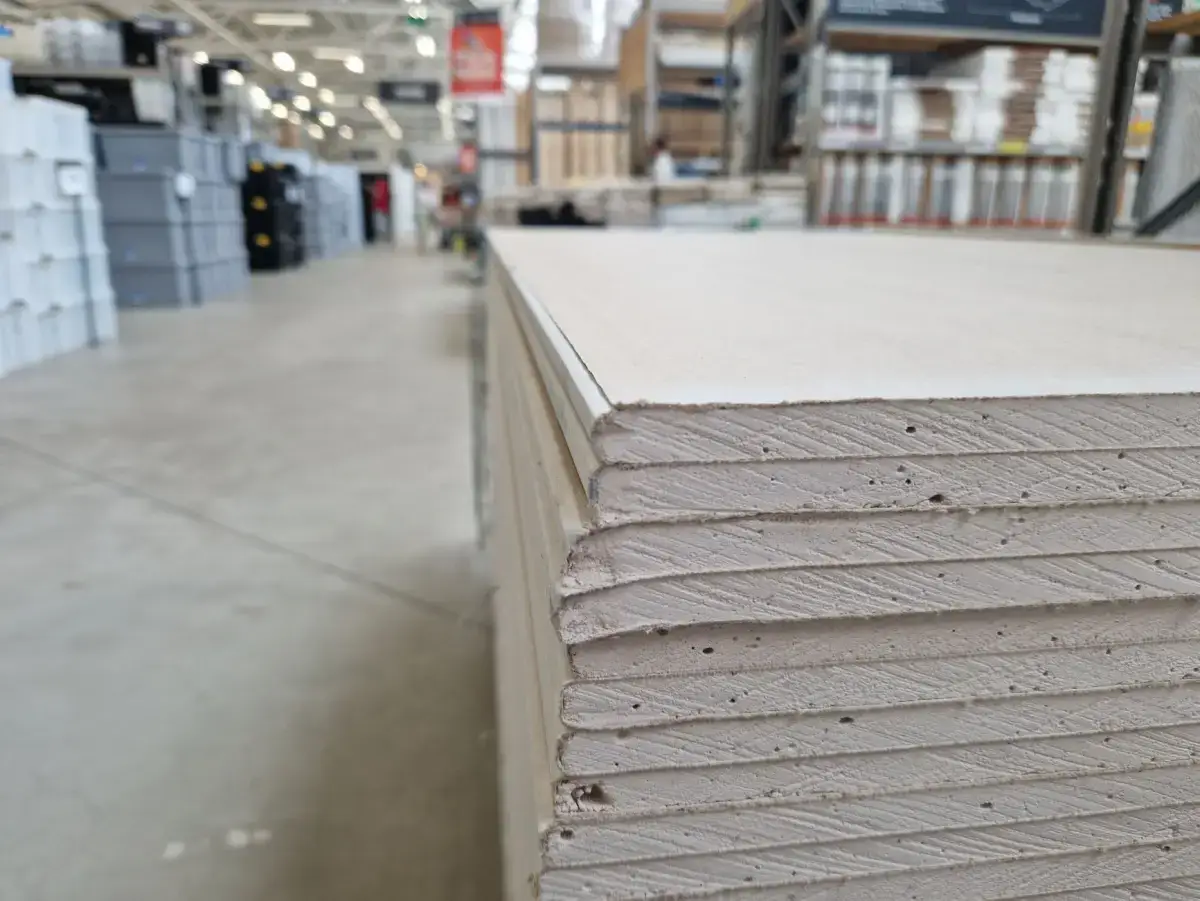
Texture sprayed onto walls, most often orange peel or knockdown. Orange peel is a fine spatter left as it lands, giving a subtly broken surface that hides minor imperfection without drawing attention. Knockdown is orange peel that is allowed to sit briefly and then flattened with a wide blade, producing broader mottled plateaus. Wall texture is applied over a Level 3 or Level 4 surface depending on how heavy the pattern is, and the heavier the texture, the more it forgives underneath — which is exactly why builders reach for it.
Ceiling Texture Application
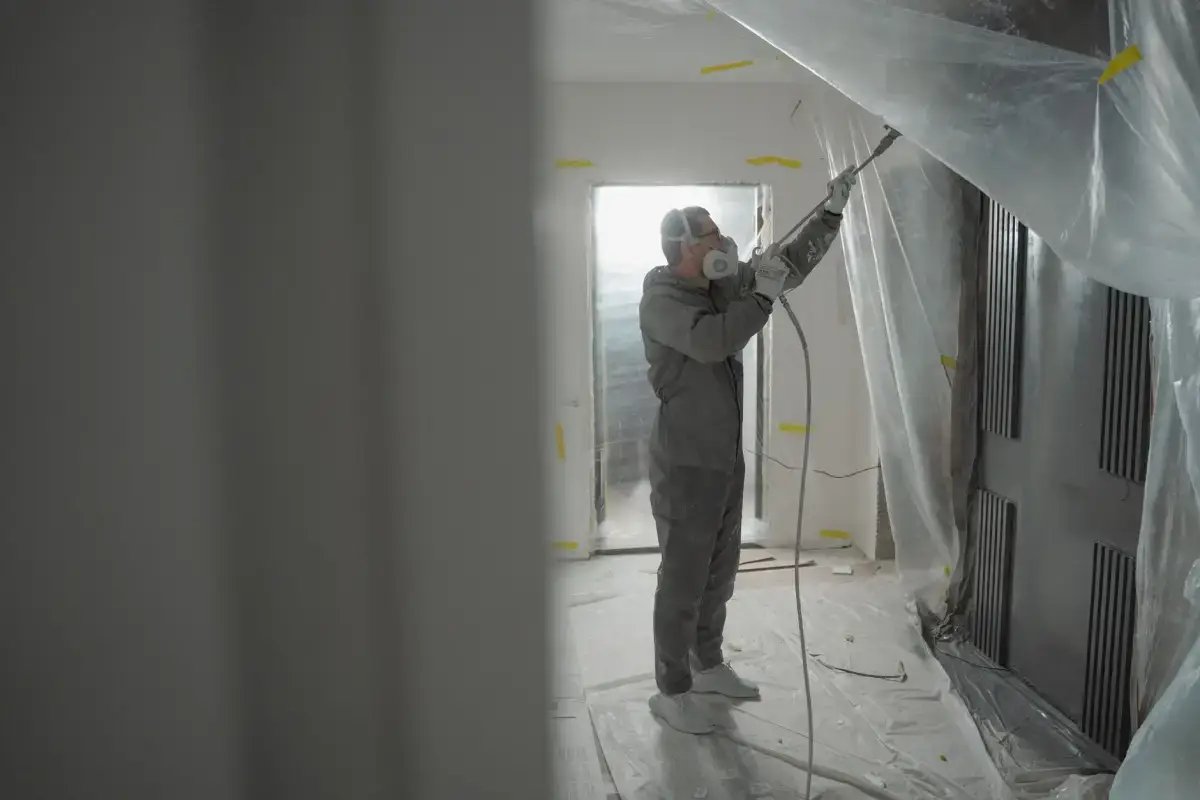
Ceilings take texture more often than walls, and for a practical reason: they are viewed in flat, diffuse light from across the room, which reveals surface variation more cruelly than a wall lit from one side. A pattern breaks that up. Knockdown and orange peel are the common modern choices. Ceiling spraying is also the messier job by a wide margin — everything below has to be masked or removed, and overspray reaches further than people expect, which is why containment is quoted as part of the work rather than added afterward.
Matching Existing Drywall Texture
The most requested and most demanding version of this work. The existing pattern is examined for type, grain size, spatter density and how far it was flattened, then reproduced on scrap and compared against the wall under a light held at a low angle. Compound thinning, nozzle aperture and air pressure all get adjusted between samples. Textures sprayed in the 1960s and 70s are the hard case, because neither the products nor the equipment are still manufactured — and on those, an honest assessment of whether a true match is achievable is worth more than an attempt that has to be undone.
Drywall Texture Repair
Restoring texture over a patched area, or fixing texture that has been damaged, painted over into mush, or applied badly in the first place. The most common failure is texture applied too heavily over a repair, which leaves a raised patch that catches light worse than the original damage did. Fixing that means scraping or sanding the excess back to the plane of the surrounding wall and re-texturing from a matched sample. Where texture has been painted repeatedly over decades the pattern softens and fills, and matching a softened texture with fresh compound needs the sample thinned accordingly.
Smooth Wall & Ceiling Finishes
The deliberate absence of texture, which is a finish choice in its own right and increasingly the one people ask for. A genuinely smooth wall means a Level 5 skim coat, because with no pattern to hide behind, every seam and fastener is exposed to the light. Removing existing texture to go smooth is a real project — scraping or skimming over the top, then skim coating the whole surface — and it is worth understanding as a resurfacing job rather than a cosmetic change. On ceilings especially, going smooth is often the better answer when an old texture cannot be matched.
Signs You Need Drywall Texturing
- A repaired area is visible because its texture does not match the surrounding surface
- New drywall meets existing textured wall and the transition shows
- Texture was applied too heavily and stands proud of the wall around it
- An addition or remodel needs texture matched to the rest of the house
- Existing texture looks tired or has been softened by repeated repainting
- You want to move from a textured surface to a smooth finish
How Drywall Texturing Works
- 1
Identify What Is Already on the Wall
Existing texture is examined closely and up against a raking light, because the naked eye at conversational distance misses most of what matters. The type gets identified — orange peel, knockdown, skip trowel, sand swirl, stomp — and then the specifics: how large the individual spatters are, how densely they cover, how far a knockdown was flattened and how much of the underlying surface still shows. Repainting history matters too, since a pattern that has taken five coats of paint over forty years is visibly softer than the same pattern fresh, and matching the original spec would produce something sharper than the wall it is joining.
- 2
Sample on Scrap Until It Matches
A piece of scrap board is prepared and sprayed, then held up against the existing wall under the same light. Almost never right first time. Compound thinning is the biggest variable, followed by nozzle aperture and air pressure — thinner compound and higher pressure give finer spatter, thicker and lower give coarser. For knockdown, the wait between spraying and flattening is a third variable and the least forgiving, since a few minutes either side changes the pattern significantly. Samples are iterated until one reads as the same surface, and that sample becomes the reference for the actual application.
- 3
Prepare, Mask, and Protect
The surface underneath is brought to the finish level the texture requires — Level 3 under a heavy pattern, Level 4 under a light one — and primed if bare compound would otherwise absorb the texture unevenly. Then masking, which on a spray job is most of the setup time. Texture travels far beyond where it is aimed: floors, trim, windows, fixtures and doorways all get covered, and adjacent rooms get sealed at the doorway. Ceiling work needs everything below either removed or fully sheeted. Skimping here does not save time, it relocates it into cleanup.
- 4
Apply, Time the Knockdown, and Prime
Texture is sprayed in even passes at a consistent distance, working wet edge to wet edge so no band shows where one pass met another. On knockdown, the material is then left to set until it has lost its shine but is not yet firm, and flattened with a wide blade in consistent overlapping strokes — this window is short and has no second chance, since flattening too early smears the pattern and too late does nothing at all. On a matched repair the new texture is feathered into the surrounding area rather than stopped at the patch edge. Everything is then primed, because texture increases surface area and unprimed compound drinks paint unevenly across it.
What Does Drywall Texturing Cost in Davenport, IA?
- Area to be textured, and whether it is wall, ceiling or both
- Whether this is new texture or a match to an existing finish
- Pattern type, since knockdown carries a second timed operation over orange peel
- How much masking and containment the space requires
- Ceiling height and whether staging is needed
- Age of the existing texture, since older finishes need more sampling to match
- Finish level required underneath before texture goes on
| Service | Cost Per Sq. Ft. | Typical Job |
|---|---|---|
| New Drywall Installation | $1.50 – $3.00 per sq. ft. | $1,000 – $3,254 per project |
| Small Patch or Hole | $75 – $350 per patch | $300 – $500 for a contractor visit |
| Larger Wall Repair | $500 – $800+ per patch | Scales with how much board comes out |
| Ceiling Repair | $297 – $472 per hole | $220 – $1,300 for the full ceiling |
| Water-Damaged Drywall | $500 – $2,500+ | Depends how far the moisture traveled |
| Texture Matching | $150 – $450 per patch | Runs 30 – 40% above a smooth finish |
Based on 2026 national cost-guide data from Angi, HomeGuide, and Homewyse. Quad Cities rates land above or below these ranges depending on ceiling height, access, texture type, and how much board has to come out before new board goes back in. Water damage is the widest range on the table because the scope isn't known until the wall is opened. You get a firm number after someone sees the job.
Cost guides put textured drywall repair at roughly 30 to 40% above a comparable smooth finish, with knockdown and orange peel patches landing around $150 to $450. What that premium buys is mostly sampling and masking rather than the spraying itself, which is quick. The number moves most on matching: a modern texture on a wall from the last twenty years usually matches inside a couple of samples, while a ceiling sprayed in 1972 can take several and may still not land — which is why the honest recommendation on those is sometimes to skim the whole surface flat instead.
What to Look for in a Davenport Drywall Texture Contractor
They Sample on Scrap, Not on Your Wall
A matched texture comes from iterating samples against the existing surface under a raking light. Spraying directly onto the repair and adjusting from there means the first attempts are on the wall you are paying to fix.
They Will Say When a Match Is Not Achievable
Some 1960s and 70s sprayed ceilings cannot be matched with anything still manufactured. Hearing that before the work, with skimming offered as the alternative, is worth far more than an attempt that has to be scraped back.
Masking Is Quoted as Part of the Job
Spray texture travels much further than people expect. A quote that treats containment as real scope rather than an afterthought is a quote from someone who has cleaned up the alternative.
They Get the Finish Level Underneath Right
Texture hides a lot but not everything. Heavy patterns can sit over Level 3, light ones need Level 4. Someone applying a fine orange peel over a rough surface is relying on the texture to do work it cannot do.
Residential & Commercial Drywall Texturing
Residential
Residential texturing in Davenport is dominated by matching rather than new application, because most local housing already has a finish on the walls or ceilings. The everyday job is making a repair disappear into what surrounds it. The second most common request is the reverse — removing texture and going smooth, which is a resurfacing project rather than a cosmetic one.
Commercial
Commercial texturing is usually specified rather than matched: a finish named in the project documents, applied across large uninterrupted areas where consistency between passes matters more than blending into anything existing. Occupied-space work is scheduled around business hours, since spraying requires masking that closes an area off entirely while it happens.
When Drywall Texturing Isn’t the Right Call
- A small repair in a closet or behind a door where nobody will look at the surface under raking light. Texture matching is a real cost and there are places it genuinely is not worth paying.
- Popcorn ceilings you want removed rather than matched. That is its own service and, in a pre-1980s home, starts with asbestos testing.
- Walls that need the underlying surface fixed first. Texture over a wavy or damaged wall highlights the problem rather than hiding it.
- Anyone expecting a guaranteed invisible match on a ceiling sprayed fifty years ago. It is often achievable and sometimes it is not, and that gets assessed honestly rather than promised.
- Addresses outside the Quad Cities.
Serving Nearby Cities
Each city below has its own page, because what is behind the wall genuinely changes across the river. Housing age swings hardest: about a third of Rock Island’s housing predates 1940 against roughly 5% of Bettendorf’s, which decides whether a job starts as plaster work or board work before anyone measures anything.
Frequently Asked Questions
- Can you match my existing wall texture exactly?
- Usually, and it is always sampled on scrap first and compared against the wall under a raking light before anything is applied. Modern orange peel and knockdown match well. Textures sprayed in the 1960s and 70s are the hard case, because the products and the spray equipment are no longer made — on those, a close match is often achievable and an exact one sometimes is not, and that assessment is given before the work rather than after a failed attempt.
- What is the difference between orange peel and knockdown?
- Orange peel is compound sprayed onto the surface and left as it lands, giving a fine even spatter like the skin of the fruit. Knockdown starts the same way, then the material is left to set briefly and flattened with a wide blade, which spreads the high points into broader mottled plateaus. Knockdown is a heavier, more visible pattern and involves a second timed operation, so it costs a little more and hides a little more.
- Can textured walls be made smooth?
- Yes, and it is a common request. Depending on the texture, it is either scraped off or skimmed over, and then the whole surface is skim coated to a Level 5 finish. It is worth thinking of it as resurfacing rather than a cosmetic change, because with no pattern left to hide behind, every seam and fastener is exposed and the surface has to be genuinely flat. On ceilings it is often the right answer when an old texture cannot be matched.
- Why does my patched area still look different after texturing?
- Most often the texture was applied without sampling first, so the grain size or coverage density is slightly off — and the eye detects a change in surface pattern very reliably even when it cannot name what changed. The other frequent cause is applying it too heavily, which leaves the patch standing proud and catching light. Both are fixable: the excess is sanded back to the plane of the wall and re-textured from a matched sample.
- Do textured walls need a different finish level underneath?
- Yes, and it is one of the more useful things to understand about texture. A heavy pattern can sit over a Level 3 finish because the texture hides minor variation, which is exactly why builders specify that combination. A light orange peel needs Level 4 underneath, since it conceals much less. And a smooth finish needs Level 5, because there is nothing hiding anything at all.
- How messy is spray texturing?
- Messier than most people expect, which is why masking is a real part of the quote. Atomised compound drifts well beyond where the gun is aimed, so floors, trim, windows and fixtures get covered and doorways to adjacent rooms get sealed. Ceiling work means everything below is removed or fully sheeted. The spraying itself is quick — the setup and the cleanup are the job.
Learn More
- Gypsum Association GA-214 — which finish level a surface needs underneath depending on how heavy the texture is
- US EPA — Asbestos — why spray-applied ceiling textures from before the mid-1980s are tested before being disturbed
- Association of the Wall and Ceiling Industry — the trade association covering wall and ceiling finishing practice
Need Drywall Texturing in Davenport, IA?
Tell us what’s going on and get an on-site estimate — no charge for the visit, and no obligation to book the work.
Get My Free Estimate