Drywall Services in Bettendorf, IA — Residential & Commercial Drywall Contractors
Installation, repair, finishing, and texture matching for Bettendorf homes and commercial spaces — a city whose housing almost entirely postdates plaster, which changes what a job here actually involves.
Davenport Elite Drywall is your local resource for drywall installation, repair, finishing, and texture matching throughout Bettendorf, IA. We work with experienced drywall professionals who hang, tape, and finish board in Quad Cities homes and commercial spaces every week.
Bettendorf is the one city in this metro where a drywall job is almost never a plaster job. The median house here went up in 1979, and only about 5% of the housing stock predates 1940 — against roughly 24% in Davenport. That single number decides most of what happens on a walkthrough. Instead of working out whether a wall is plaster over wood lath and how thick it runs, the question is usually which board is already there and how to match a texture that was sprayed forty years ago.
What that leaves is a different kind of work: additions tying into 1980s and 1990s framing, lower levels being finished for the first time, garages that need a fire-rated assembly verified rather than built from scratch, and commercial tenant spaces turning over along a downtown that has been rebuilt around the new I-74 bridge. None of it is easier than plaster work. It just fails in different places.
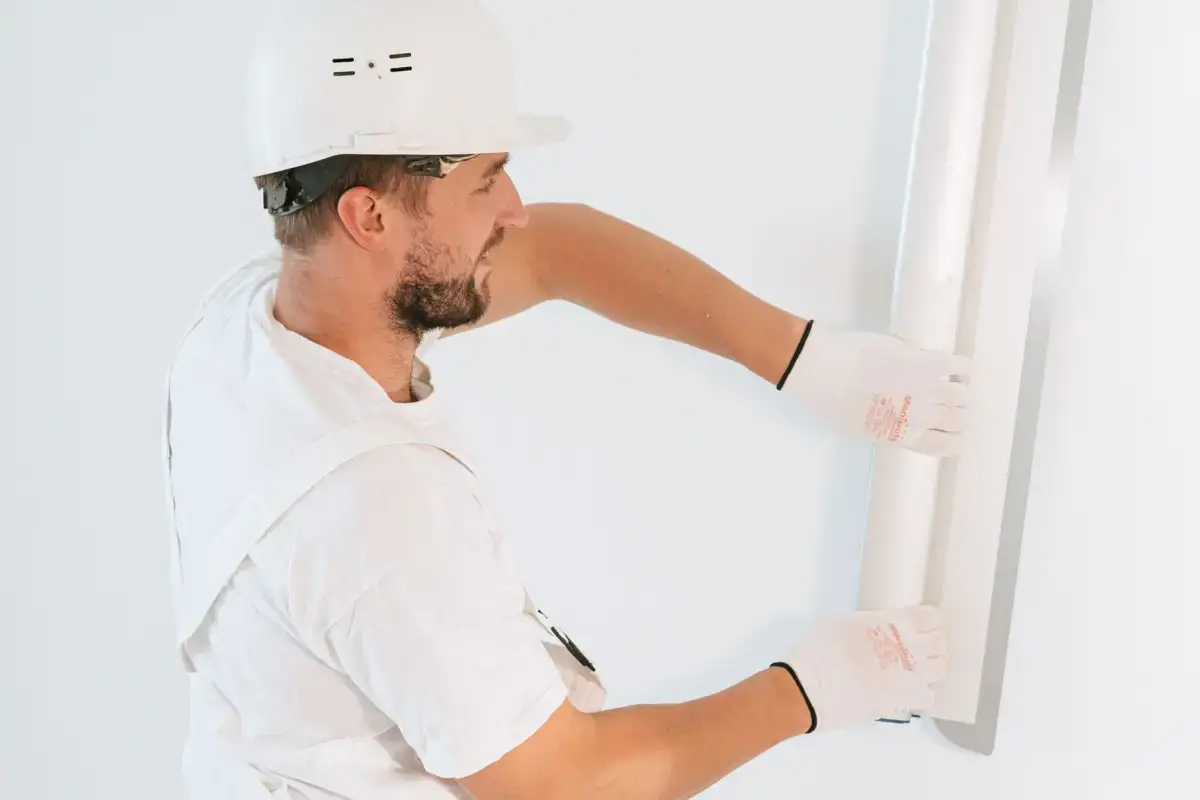
Drywall Services in Bettendorf, IA
Installation, basement drywall, and finishing carry most of the residential volume in Bettendorf. Plaster repair almost never does — which is the exact opposite of how this list runs across the river in Rock Island or Moline.
Residential Drywall
The Drywall Process on a Bettendorf Job
- 1
Walkthrough, Measurement, and Panel Decisions
The job starts with someone in the space measuring square footage and looking at what the room actually is. Ceiling height sets whether panels run 8, 9, or 12 feet and how many butt joints the room will end up with — fewer joints means a flatter wall, so panel length is a quality decision, not just a materials one. Each area is assigned a panel type: standard board for most living space, moisture-resistant where humidity collects or the room sits below grade, and Type X where an attached garage or a shared assembly requires a fire rating. The framing is checked at the same time for plane, plumb, and whether there is backing behind every seam and corner, because board fastened to bowed or unbacked framing telegraphs that bow permanently. Anything that needs furring or shimming gets identified here rather than discovered mid-hang. In Bettendorf that walkthrough usually confirms board rather than plaster behind the existing wall, which makes thickness matching a simpler decision here than it is in the older river towns.
- 2
Hanging the Board
Ceilings go up before walls, so the wall panels butt up underneath and help carry the ceiling edge. Panels run perpendicular to the framing, which crosses more members and stiffens the assembly, and seams are staggered rather than stacked so no single line runs the height of a wall. Butt joints land on framing or added backing instead of floating between studs. Screws are set to dimple the paper without tearing through it — a screw driven too deep loses its grip and becomes next winter's pop, and one left proud shows through the finish. Cutouts for boxes, registers, and fixtures are measured and cut as the panel goes up rather than patched afterward, since a tight cutout is easier to finish than an oversized one filled with compound.
- 3
Taping, Coating, and Corner Work
Tape is bedded into a first coat of compound over every seam, and corner bead is set on every outside corner to give it a straight, protected edge. Inside corners are taped square. Then come the fill and finish coats, each one wider than the last, feathering the buildup out across the surface so the eye cannot find where the seam stops. Fastener heads get the same treatment, typically three passes. Drying time between coats is not optional and it is most of the calendar on a drywall job — compound coated over material that is still damp shrinks unevenly and cracks later. This is the stage where rushing shows up most visibly, and it is why a room takes days rather than hours.
- 4
Sanding to the Agreed Finish Level
The surface is sanded to the level the room actually needs. A Level 3 is adequate under heavy texture. Level 4 is the standard for walls taking flat or eggshell paint and is what most rooms get. Level 5 adds a skim coat across the entire surface and is the right call under gloss or semi-gloss paint, on a long wall with a window at one end, or anywhere a light source rakes down the surface at a low angle — conditions where anything less will show every seam. Work lights get set at a low angle deliberately during sanding, because that is the condition that reveals imperfections, and finding them then is the whole point. The room is walked before it is called finished. In a Bettendorf great room with a window wall facing the river, low-angle afternoon light is the condition that decides whether Level 4 is enough — and it is the reason to raise the question before the quote, not after the paint.
One Local Drywall Relationship, Not a Bidding War
A phone number and a truck in the driveway don't make a company. Here's what's actually different about ours for a job in Bettendorf, IA.
The Estimate Is the Price
The itemized number from the walkthrough is the number on the invoice. The professionals we work with don't discover new line items halfway through a job that was already priced.
One Relationship, Not a Bidding War
This isn't a marketplace that hands your address to whoever answers first. The same experienced drywall professional carries the job from the first walkthrough through the final coat.
A Real Look, Not a Phone Quote
A number given over the phone is a guess about what's behind the wall. Framing, existing texture, and how far water actually traveled all change the job, and none of them are visible from a description.
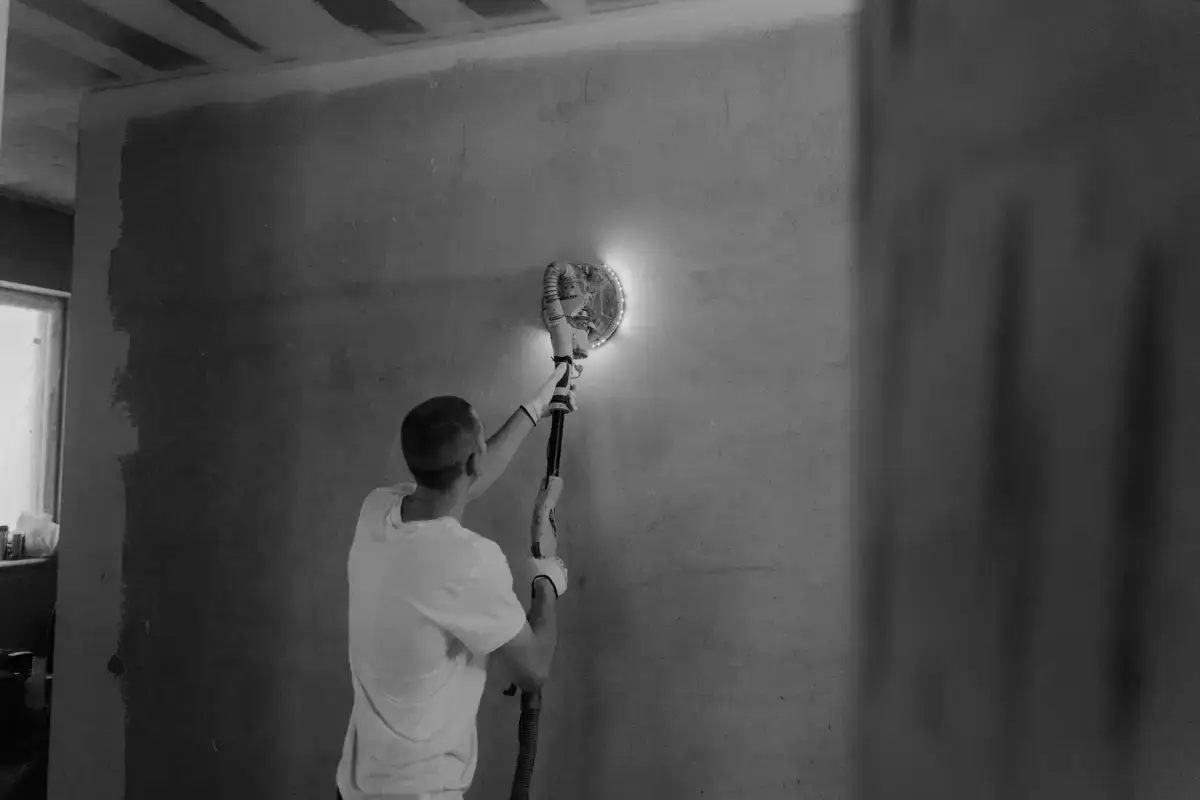
What Drywall Work Looks Like in Bettendorf, IA
A Housing Stock That Postdates Plaster
Bettendorf's median construction year is 1979, and roughly 5% of its housing was built before 1940 — the newest stock of any city in the coverage area. The practical effect is that the plaster-to-drywall transition that dominates older Quad Cities neighborhoods barely comes up here. What replaces it as the hard part is texture matching. A knockdown or orange peel sprayed in the 1980s has weathered, been painted over several times, and will not match a fresh spray straight off the gun. That gets sampled on a scrap panel and adjusted before anything goes on your wall.
Riverfront Lower Levels and Moisture-Resistant Board
Bettendorf's riverfront is protected by flood walls and levees that top out around 29 feet on the Rock Island gauge, which is a long way above an ordinary spring rise — but protection from a river crest is not the same as a dry wall cavity. Humidity off the Mississippi works on a finished lower level year-round, through the slab and through the air. For anything below grade close to the river, moisture-resistant board is the starting spec rather than the upgrade, and the bottom edge gets held up off the slab so a future rise does not wick straight into it.
Attached Garages and Type X
The assembly separating an attached garage from living space has to resist fire, which generally means Type X board of a specified thickness, fastened at a specified spacing, with the joints treated. In a city where most garages were built to a modern code in the first place, a garage project is usually verification rather than construction — confirming what is behind the existing board before a conversion covers it up. Where that check turns up standard board substituted in at some point, it is a real safety issue and it gets corrected before anything else happens.
Downtown Tenant Spaces
Commercial drywall in Bettendorf carries requirements a house does not: rated assemblies between tenant spaces, sound ratings called out in the project documents, and a finish schedule written by an architect rather than agreed on site. Work gets sequenced against the trades booked before and after it, and inspection timing usually drives the calendar more than the drywall itself does. A build-out in an occupied building adds dust control and after-hours access to that list before a single stud goes up.
Where This Comes Up Around Bettendorf, IA
From Gilbert to Bettendorf
The settlement of Gilbert was established in 1858 by Elias Gilbert. Around 1900 the town offered William and Joseph Bettendorf 70 acres of riverfront to move their iron wagon works over from Davenport; the factory transformed the place, and when it incorporated in 1903 with 440 residents it took the brothers' name. That history is why the oldest housing sits in a thin band near the river and essentially everything else is postwar.
The Downtown Rebuild
The I-74 bridge replacement — a $1.2 billion project begun in July 2017 and completed in 2021 — came with a reworked downtown, including converting Grant Street back to two-way traffic. Commercial space along that corridor has been turning over since, which is why tenant build-out work makes up more of the local volume than the city's size would suggest.
When We’re Not the Right Call
- Addresses outside the Quad Cities — the professionals we work with keep the range tight so the schedule stays honest, and a two-county radius is already as wide as that holds.
- A single sheet of board in a closet you are comfortable hanging yourself. Rent a panel lift for the day and it is a genuinely doable weekend job.
- One nail hole, on its own, at the far edge of the coverage area. A patch that size is not worth anybody's drive across two counties — batch it with the other four you have been ignoring and it becomes one visit worth making.
- Framing that has not passed rough-in inspection yet. Board hung over unapproved electrical or plumbing comes straight back off, and the second hang is on you.
- A wall that keeps cracking along the same line after a proper three-coat repair. That is movement, and until the movement is settled the drywall is the wrong trade to be calling.
Frequently Asked Questions
- Do you serve Bettendorf, IA?
- Yes. Bettendorf sits about 5.7 miles east of Davenport, directly adjacent along the river, and it is part of the everyday coverage area rather than a special trip.
- Does Bettendorf have plaster walls like older Davenport neighborhoods?
- Rarely. Bettendorf's median construction year is 1979 and only about 5% of its housing predates 1940, compared with roughly 24% in Davenport. Outside a thin band of older houses near the river, a wall here is almost always gypsum board. If you are in one of those older river-adjacent houses, it is worth confirming at the walkthrough rather than assuming either way.
- Why is matching my existing texture harder than hanging new board?
- Because the texture on your wall has aged and yours is the only reference. A knockdown or orange peel sprayed in the 1980s has been painted over several times and does not match fresh compound off the gun. The match gets built on a scrap panel and adjusted until it reads right in your room's light, then sprayed. Anyone who skips the sample step is guessing, and the guess shows up as a patch you can find from the doorway.
- Do I need moisture-resistant board in a Bettendorf lower level?
- Close to the river, yes — humidity off the Mississippi works on a finished lower level year-round regardless of whether it has ever flooded. Further up and away from the water it becomes a bathroom-and-laundry decision rather than a whole-basement default. Either way it is not a substitute for fixing an actual water problem before you cover the wall.
- How much does drywall work cost in Bettendorf?
- It depends on square footage, board type, ceiling height, and finish level. National cost guides put drywall installation at roughly $1.50 to $3.00 per square foot all-in, and a small patch at $300 to $500 once a contractor is on site. What those numbers cannot price is framing that is not flat, which is the single most common reason a real quote lands above a calculator estimate. Get an on-site quote for an exact figure — a phone estimate cannot account for framing condition or access.
Learn More
- Gypsum Association GA-214 — the industry standard defining drywall finish Levels 0 through 5, published with AWCI, CISCA, PDCA and the Drywall Finishing Council
- US EPA — Indoor Air Quality: Moisture Control — why gypsum board below grade needs moisture planned for before it is installed, not after
- National Weather Service — Quad Cities — river stages and flood outlooks that affect below-grade work in Davenport
Need Drywall Services in Bettendorf, IA?
Tell us what’s going on and get an immediate on-site quote — no charge for the estimate, and no obligation to book it.
Get My Free Estimate