Drywall Services in Le Claire, IA — Residential & Commercial Drywall Contractors
Plaster repair, patching, finishing, and storefront build-out for Le Claire homes and businesses, in a town whose historic core was built two generations before drywall was invented.
Davenport Elite Drywall is your local resource for drywall repair, plaster work, finishing, and commercial build-out throughout Le Claire, IA. We work with experienced professionals who re-key loose plaster, patch failing sections, and blend plaster into drywall in older Quad Cities buildings.
Le Claire's historic core is old enough that drywall is not the starting point of the conversation — plaster is. The buildings along Cody Road were largely put up between 1850 and 1870, which is roughly eighty years before gypsum board became the standard interior wall. An interior job in that part of town begins by establishing what is actually behind the surface, because plaster over wood lath and plaster applied directly to masonry fail differently and get repaired differently, and both are common in a river town of that vintage.
Away from the historic strip the work looks more like the rest of Scott County, but the strip is where most of the calls come from — a nine-block stretch that carries the town's commercial block at one end and its oldest houses at the other, all of it sitting directly on the Mississippi.
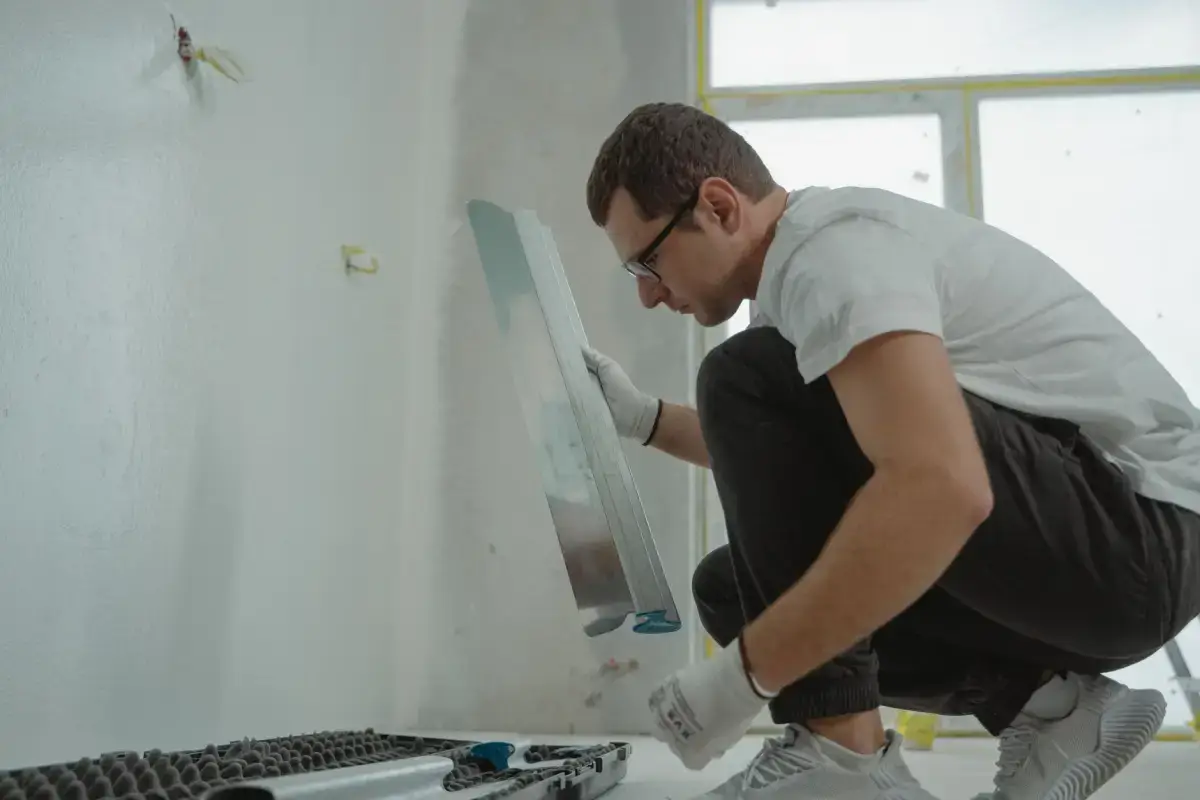
Drywall Services in Le Claire, IA
Plaster repair, drywall repair, and tenant build-out carry most of the work in Le Claire's historic core. Newer parts of town look more like the rest of Scott County.
Residential Drywall
The Drywall Process on a Le Claire Job
- 1
Walkthrough, Measurement, and Panel Decisions
The job starts with someone in the space measuring square footage and looking at what the room actually is. Ceiling height sets whether panels run 8, 9, or 12 feet and how many butt joints the room will end up with — fewer joints means a flatter wall, so panel length is a quality decision, not just a materials one. Each area is assigned a panel type: standard board for most living space, moisture-resistant where humidity collects or the room sits below grade, and Type X where an attached garage or a shared assembly requires a fire rating. The framing is checked at the same time for plane, plumb, and whether there is backing behind every seam and corner, because board fastened to bowed or unbacked framing telegraphs that bow permanently. Anything that needs furring or shimming gets identified here rather than discovered mid-hang.
- 2
Hanging the Board
Ceilings go up before walls, so the wall panels butt up underneath and help carry the ceiling edge. Panels run perpendicular to the framing, which crosses more members and stiffens the assembly, and seams are staggered rather than stacked so no single line runs the height of a wall. Butt joints land on framing or added backing instead of floating between studs. Screws are set to dimple the paper without tearing through it — a screw driven too deep loses its grip and becomes next winter's pop, and one left proud shows through the finish. Cutouts for boxes, registers, and fixtures are measured and cut as the panel goes up rather than patched afterward, since a tight cutout is easier to finish than an oversized one filled with compound.
- 3
Taping, Coating, and Corner Work
Tape is bedded into a first coat of compound over every seam, and corner bead is set on every outside corner to give it a straight, protected edge. Inside corners are taped square. Then come the fill and finish coats, each one wider than the last, feathering the buildup out across the surface so the eye cannot find where the seam stops. Fastener heads get the same treatment, typically three passes. Drying time between coats is not optional and it is most of the calendar on a drywall job — compound coated over material that is still damp shrinks unevenly and cracks later. This is the stage where rushing shows up most visibly, and it is why a room takes days rather than hours. In a Cody Road building, corner bead frequently has to be set against masonry-backed furring rather than stud framing, which changes both the fastening and how much movement the corner will take.
- 4
Sanding to the Agreed Finish Level
The surface is sanded to the level the room actually needs. A Level 3 is adequate under heavy texture. Level 4 is the standard for walls taking flat or eggshell paint and is what most rooms get. Level 5 adds a skim coat across the entire surface and is the right call under gloss or semi-gloss paint, on a long wall with a window at one end, or anywhere a light source rakes down the surface at a low angle — conditions where anything less will show every seam. Work lights get set at a low angle deliberately during sanding, because that is the condition that reveals imperfections, and finding them then is the whole point. The room is walked before it is called finished.
One Local Drywall Relationship, Not a Bidding War
A phone number and a truck in the driveway don't make a company. Here's what's actually different about ours for a job in Le Claire, IA.
The Estimate Is the Price
The itemized number from the walkthrough is the number on the invoice. The professionals we work with don't discover new line items halfway through a job that was already priced.
One Relationship, Not a Bidding War
This isn't a marketplace that hands your address to whoever answers first. The same experienced drywall professional carries the job from the first walkthrough through the final coat.
A Real Look, Not a Phone Quote
A number given over the phone is a guess about what's behind the wall. Framing, existing texture, and how far water actually traveled all change the job, and none of them are visible from a description.
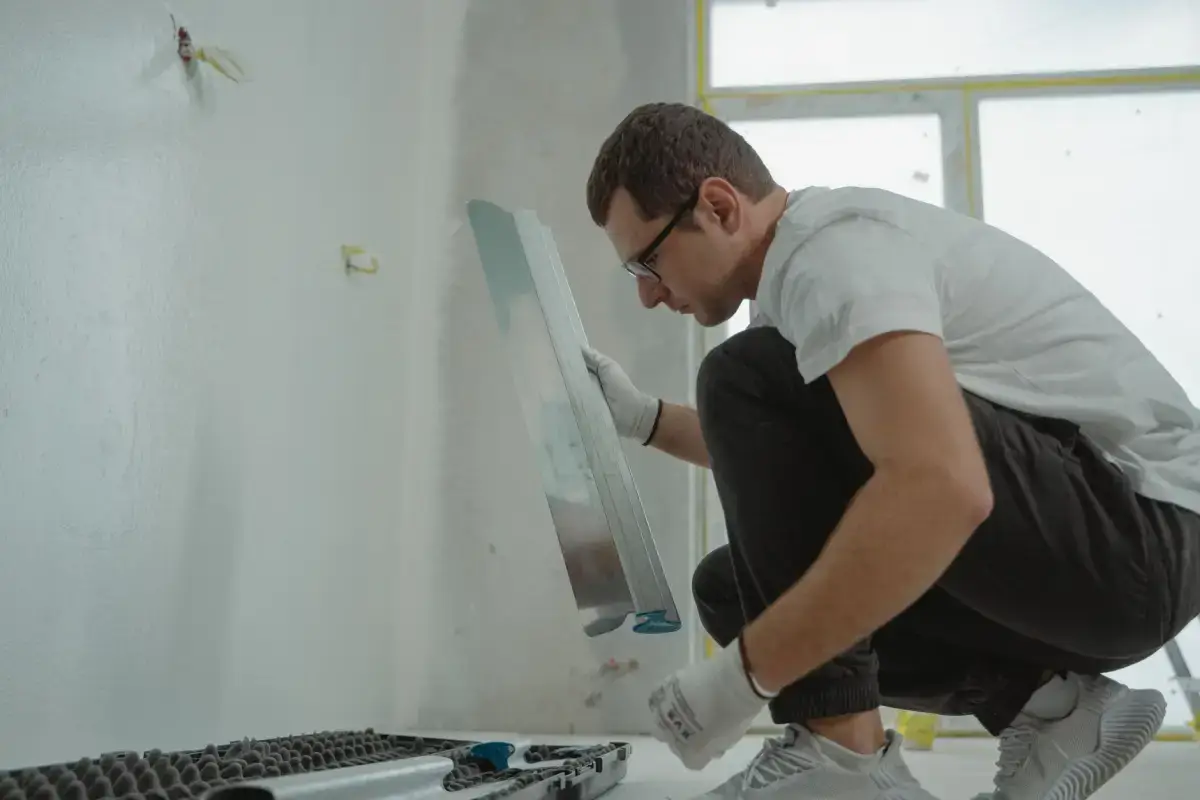
What Drywall Work Looks Like in Le Claire, IA
The Cody Road Historic District
The Cody Road Historic District was listed on the National Register on May 7, 1979. It covers 60 buildings along nine blocks of US Route 67, predominantly Italianate, built mostly between 1850 and 1870, with the commercial block at the south end and housing at the north. Interior work in buildings this old starts with a question that has two possible answers: plaster over wood lath, or plaster laid directly onto masonry. The first fails by losing its key to the lath and can often be re-keyed. The second fails at the bond with the wall behind it and generally cannot. Deciding which one you have before quoting the repair is not optional.
Storefront Build-Outs in 170-Year-Old Buildings
The district's south end is Le Claire's commercial block, and a storefront changing hands in a building from the 1850s or 1860s is a build-out against masonry that was never intended to be flat. Board fastened straight to a wall like that telegraphs every bow in it, and a laser line will typically show an inch or more of movement across a single wall. Furring strips shimmed to a common plane come first, which is labour that a per-square-foot estimate does not anticipate — and it is the most common reason a real quote in this block lands above a calculator number.
Steamboat-Era Framing
Le Claire grew as a steamboat and rafting town, and its historic buildings predate dimensional lumber standards entirely. A "two-by-four" in a structure from the 1850s is frequently a full, rough-sawn two inches by four inches, and joist and stud spacing follows whatever the builder decided rather than a 16- or 24-inch standard. Furring and shimming to a common plane is therefore part of the job rather than a surprise found halfway through, and it is why the framing check happens before board gets ordered rather than after it is delivered.
Lower Levels at the River's Edge
Le Claire sits directly on the Mississippi at Lock and Dam 14. For anything below grade close to the water, moisture-resistant board is the starting specification rather than an upgrade, and the bottom edge of the board gets held up off the slab so a rise wicks into nothing. In a finished lower level that already has a stain on the wall, the honest advice is to check what is behind the board before repainting over it — gypsum that has taken water stays soft well above the visible line, and paint hides that for exactly one season.
Where This Comes Up Around Le Claire, IA
Antoine LeClaire's Town
Le Claire was incorporated in 1855 and takes its name from Antoine LeClaire, a Métis trader of First Nations and French-Canadian descent who originally owned the land. European-American settlement had begun in the 1830s. That timeline is why the town's core housing is a full generation older than most of what surrounds it in Scott County.
A Downtown That Runs on Visitors
The Buffalo Bill Museum, commemorating William F. Cody, who was born nearby in 1846, anchors a downtown that runs largely on visitors — as does bald eagle viewing at Lock and Dam 14 from December through March. The practical effect on interior work is scheduling: a business in that block wants the job done in its quiet weeks, and the part of a drywall schedule that cannot be compressed is drying time between compound coats.
When We’re Not the Right Call
- Addresses outside the Quad Cities — the professionals we work with keep the range tight so the schedule stays honest, and a two-county radius is already as wide as that holds.
- A single sheet of board in a closet you are comfortable hanging yourself. Rent a panel lift for the day and it is a genuinely doable weekend job.
- One nail hole, on its own, at the far edge of the coverage area. A patch that size is not worth anybody's drive across two counties — batch it with the other four you have been ignoring and it becomes one visit worth making.
- Framing that has not passed rough-in inspection yet. Board hung over unapproved electrical or plumbing comes straight back off, and the second hang is on you.
- A wall that keeps cracking along the same line after a proper three-coat repair. That is movement, and until the movement is settled the drywall is the wrong trade to be calling.
Frequently Asked Questions
- Do you serve Le Claire, IA?
- Yes. Le Claire is about 11.9 miles east-northeast of Davenport, upriver along the Mississippi, and it is inside the regular coverage area.
- Are the buildings on Cody Road plaster?
- Almost certainly, and it is worth finding out which kind. The district's 60 buildings were built mostly between 1850 and 1870, decades before gypsum board existed. In buildings that age you find plaster over wood lath and plaster applied directly to masonry, sometimes in the same structure. They fail differently — lath plaster can often be re-keyed, plaster bonded to masonry generally cannot — so the repair plan follows from that answer rather than preceding it.
- I'm opening a shop in a historic Le Claire building. Does the district restrict the interior?
- National Register listing does not by itself control interior work, which surprises most people. What actually shapes the build-out is the building: masonry walls that were never flat, framing that predates lumber standards, and ceiling heights that follow no particular rule. Budget for furring and shimming rather than for permission. If your plans touch the exterior or the storefront, that is a separate question and the city is the place to ask it.
- Do I need moisture-resistant board in a Le Claire lower level?
- Close to the river, yes — treat it as the starting spec rather than an upgrade. The town sits directly on the Mississippi at Lock and Dam 14, and a lower level there deals with humidity and groundwater whether or not it has ever visibly taken water. It is also not a substitute for solving an actual water problem, and covering one up is the most expensive thing you can do to a finished basement.
- How much does drywall or plaster work cost in Le Claire?
- It depends on square footage, board type, ceiling height, and finish level. National cost guides put drywall installation at roughly $1.50 to $3.00 per square foot all-in, and a small patch at $300 to $500 once a contractor is on site. What those numbers cannot price is framing that is not flat, which is the single most common reason a real quote lands above a calculator estimate. Get an on-site quote for an exact figure — a phone estimate cannot account for framing condition or access.
Learn More
- Gypsum Association GA-214 — the industry standard defining drywall finish Levels 0 through 5, published with AWCI, CISCA, PDCA and the Drywall Finishing Council
- US EPA — Indoor Air Quality: Moisture Control — why gypsum board below grade needs moisture planned for before it is installed, not after
- National Weather Service — Quad Cities — river stages and flood outlooks that affect below-grade work in Davenport
Need Drywall Services in Le Claire, IA?
Tell us what’s going on and get an immediate on-site quote — no charge for the estimate, and no obligation to book it.
Get My Free Estimate