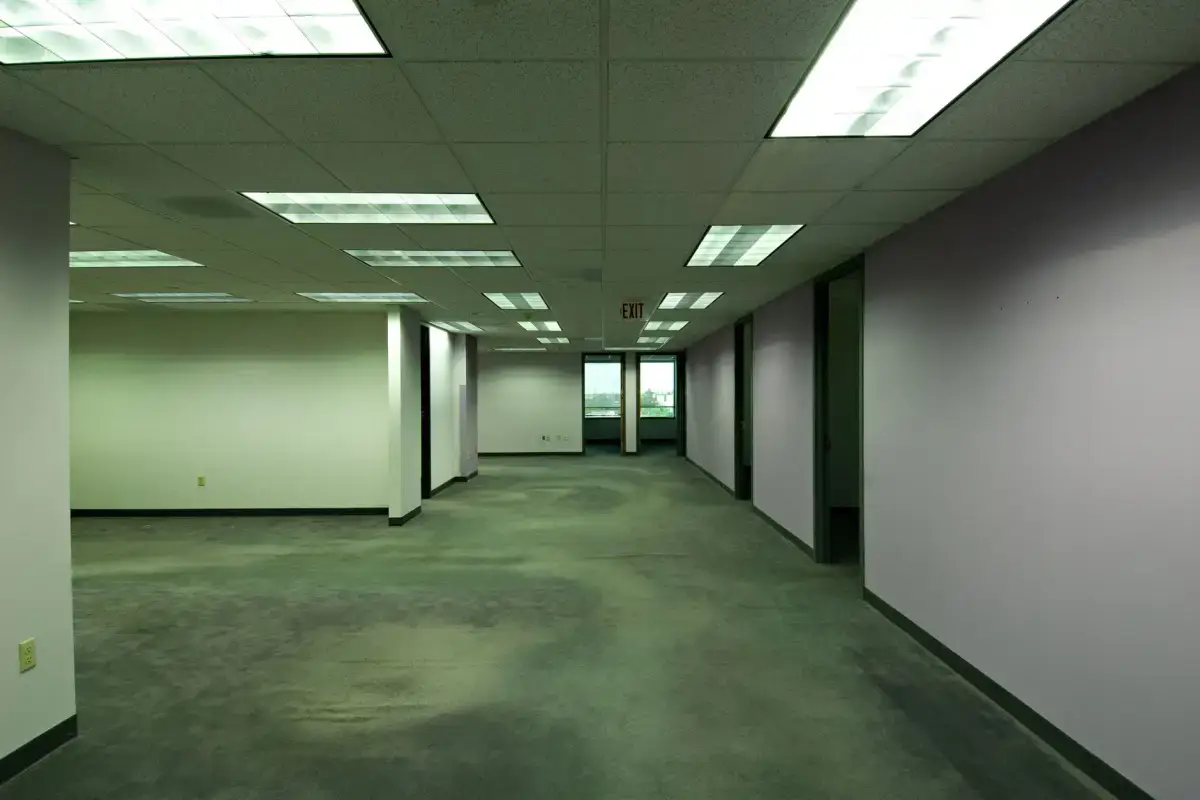
Commercial Drywall Finishing in Davenport, IA — Commercial Drywall Finishing to Specification
Finish schedules delivered as written across Davenport and the Quad Cities. Level 4 through general areas, Level 5 where feature lighting will find every seam — and written confirmation of what was delivered where.
Commercial Drywall Finishing in Davenport, IA
Davenport Elite Drywall is your local resource for commercial drywall finishing throughout Davenport and the Quad Cities. We work with experienced commercial drywall professionals who deliver a written finish schedule area by area rather than a general standard.
On a commercial project the finish is specified rather than discussed. Project documents name a level, usually by area, and that level has a definition — GA-214, published by the Gypsum Association with the wall and ceiling, painting and drywall finishing trade bodies, sets out what each one requires in coats and coverage. Delivering to it is a contractual obligation, not a judgment about what looks acceptable under temporary lighting.
That has a practical consequence residential work rarely faces. When a painter arrives and the specified sheen reveals seam banding, the question of what level was actually delivered becomes a dispute — and if nobody recorded it, it is an unwinnable one. Documenting the delivered level by area, at handover, resolves that before it starts.
Commercial finishing also differs in geometry. Long uninterrupted walls, tall spaces and continuous even lighting are all conditions that expose a surface rather than flatter it, which is why the higher levels appear more often in a specification here than they would in a house.
What’s Included in a Davenport Commercial Drywall Finishing Quote
- Finish schedule read from the project documents and confirmed area by area before work starts
- Compound selected by stage — adhesion for bedding tape, sandability on top coats
- Setting-type compound used where the schedule requires a cure rather than a dry
- Coats built and dried on a real schedule, coordinated with the site schedule
- Level 5 skim across full surfaces where specified, not just over the joints
- Sanding verified under raking light, which is what feature lighting will replicate
- Delivered level recorded in writing by area for the project record
- Surface left dust-free and ready for the painting contractor
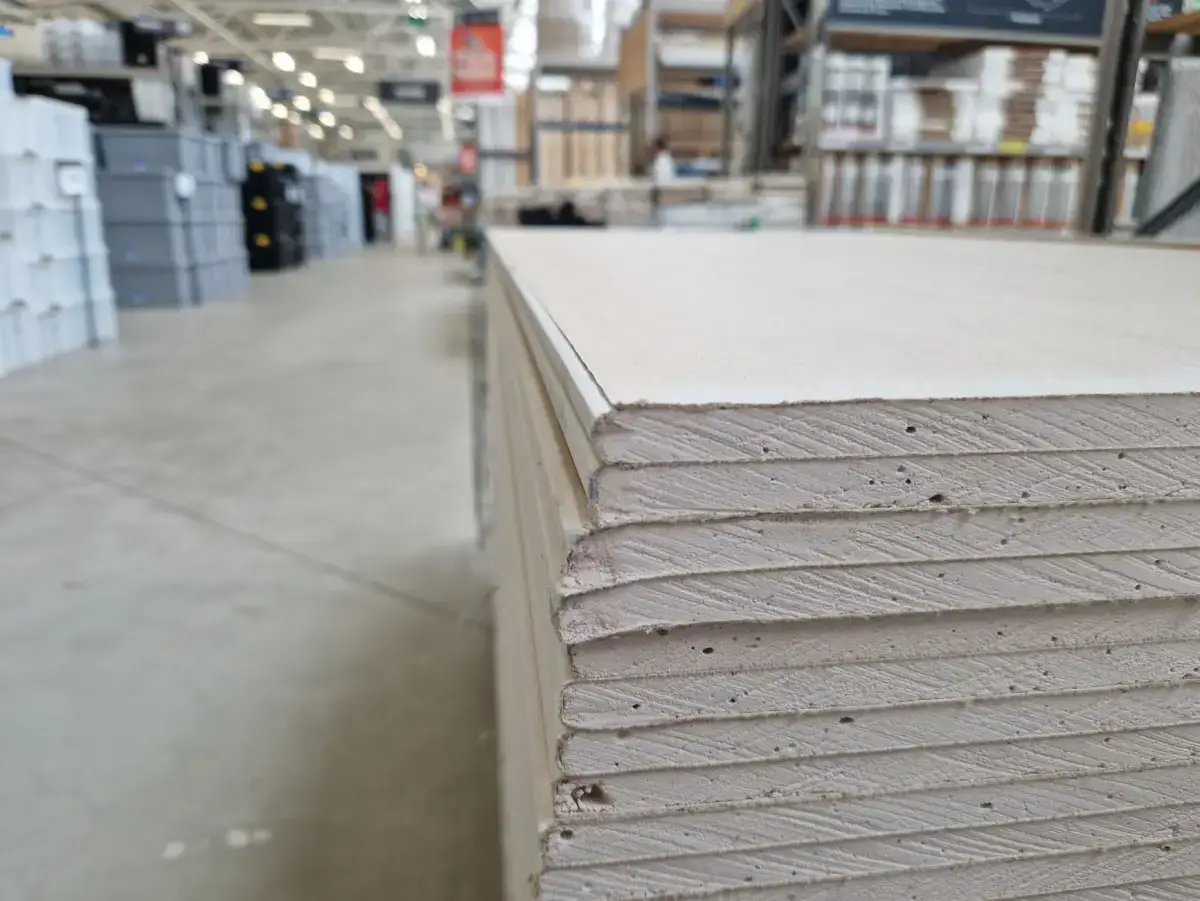
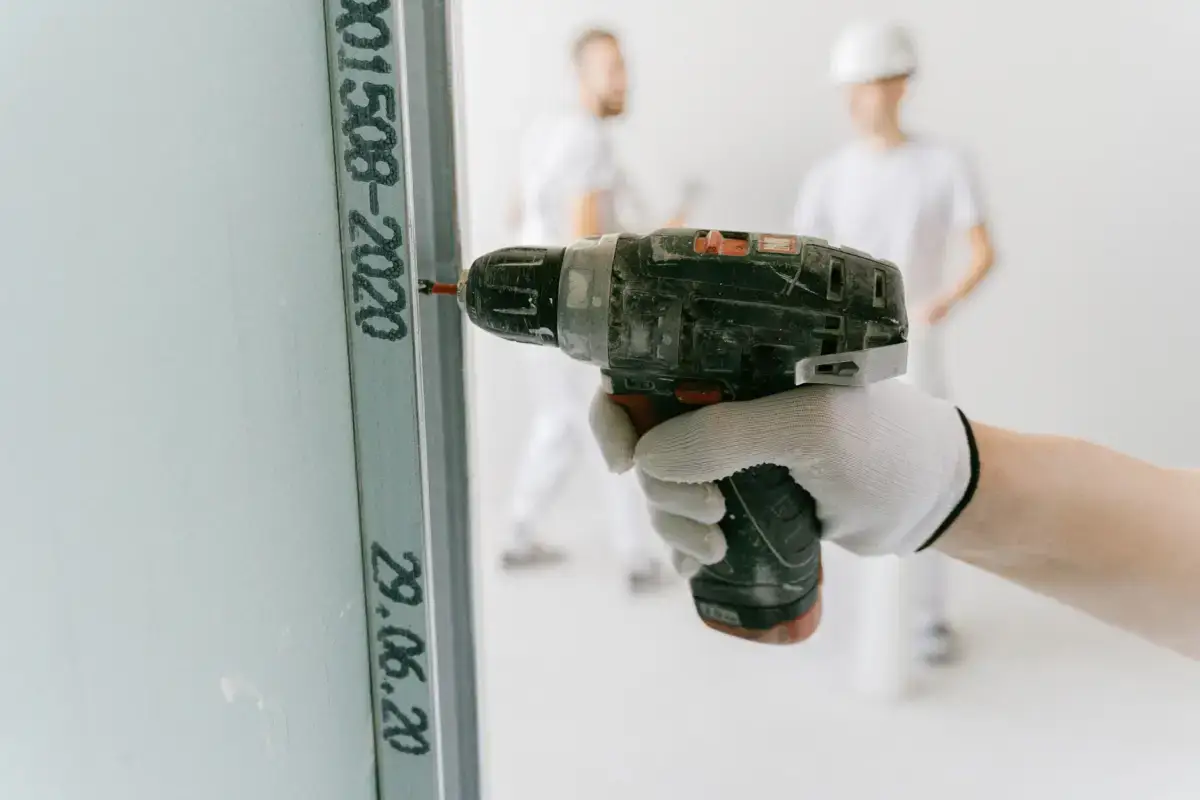
Commercial Drywall Finishing in Davenport, IA
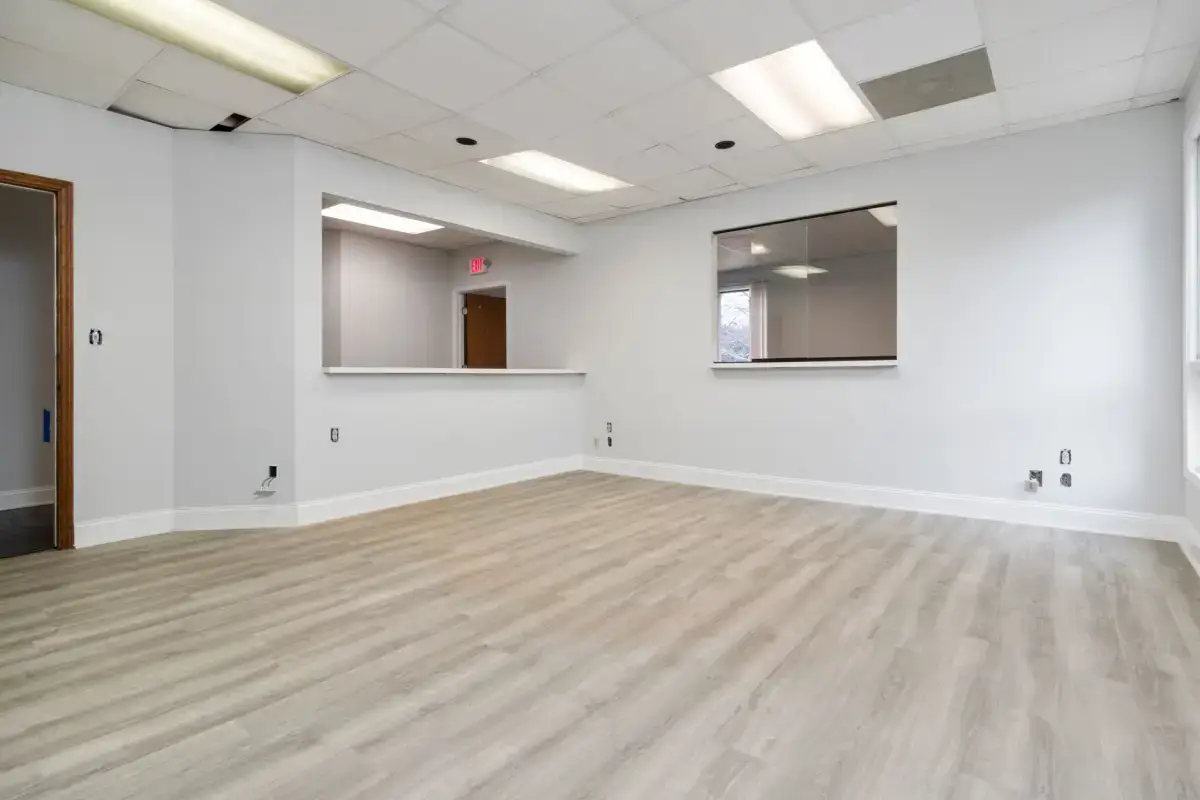
Commercial Drywall Taping
Bedding tape across the long, repetitive seam runs commercial work produces. The geometry differs from residential: fewer corners and interruptions, but far greater continuous length, which makes consistency along a run the thing that matters most — a variation in coat width that would vanish in a broken-up domestic room reads as a visible band down thirty feet of corridor. Butt joints get particular attention on long walls, since they have no tapered recess and need the widest feathering of anything on the surface.
Commercial Drywall Mudding
Building the coats, with compound selection driven by the schedule as well as the surface. Taping compound has the adhesion required to bed tape and fill fasteners; topping compound sands most easily and belongs on final coats only. Where a site schedule leaves no room to wait on evaporation, setting-type compound is the legitimate answer — it cures chemically and can take a four-day sequence to three. What it cannot do is remove the need for drying discipline entirely, and a schedule that assumes it can produces seams that shrink after the painter has gone.
Level 4 Drywall Finishes
Tape plus three coats over seams and fasteners, feathered out — the standard specification for general commercial areas taking flat or eggshell paint or a light texture. Open-plan floors, back-of-house, storage and circulation space are usually Level 4, and correctly so. Its limit is the same in an office as in a house: put a sheen on it, or run a light down it at a low angle, and the seam pattern appears even though the workmanship met the specification exactly.
Level 5 Drywall Finishes
Level 4 plus a skim coat across the entire surface. The purpose is uniformity rather than smoothness — it equalises porosity between the compounded areas and the bare paper facing so paint dries evenly and no seam pattern telegraphs through. GA-214 calls for it under gloss and semi-gloss, dark colors, and severe or critical lighting, all of which are common in commercial lobbies, boardrooms, reception areas and anywhere feature lighting grazes a wall deliberately. It is a full additional surface operation and it carries real cost, which is why it is scheduled by area rather than applied throughout.
Paint-Ready Commercial Drywall
The handover condition: sanded to the specified level, free of ridges, tool marks and sanding scratches, dust removed, and ready for the painting contractor to prime. On commercial work this is a transfer between trades rather than the end of a job, so what matters is that the painter can start immediately without remedial work. Dust removal is the most commonly underdone part — primer applied over residual sanding dust bonds to the dust rather than the board, and the resulting failure surfaces weeks later, by which point establishing whose problem it is has become expensive.
Signs You Need Commercial Drywall Finishing
- Project documents name finish levels and board is hung ready to receive them
- A painting contractor has flagged that the current surface will not carry the specified sheen
- Seam banding is visible in a completed space under feature lighting
- A lobby or boardroom is specified at Level 5 and the rest of the floor at Level 4
- A tenant fit-out needs finishing to a landlord's building standard
- A finished space needs remedial skimming before it can be handed over
How Commercial Drywall Finishing Works
- 1
Read the Schedule and Confirm It by Area
Before any compound, the finish schedule is taken from the project documents and walked through area by area, because commercial specifications are rarely uniform across a floor. General space is typically Level 4, lobbies and boardrooms Level 5, and back-of-house sometimes Level 3 under texture. Where the documents are silent or contradictory, that gets raised with the architect or general contractor rather than resolved by assumption — the gap between Level 4 and Level 5 is significant in both cost and appearance, and deciding it unilaterally on site is how a variation claim starts. The agreed schedule is confirmed in writing before work begins.
- 2
Prepare the Surface and Set the Sequence
The hung board is walked and corrected first: proud fasteners driven below the surface, over-driven ones supplemented, damaged edges and torn face paper repaired, and wide gaps pre-filled with setting compound rather than bridged by tape. Then the sequence is set against the site schedule. Drywall finishing sits on the critical path, so coat-and-dry cycles have to be planned against when the painters are due rather than discovered to be incompatible with it. This is where the decision to use setting-type compound is made — deliberately, because the schedule genuinely requires a chemical cure, rather than reactively when the schedule slips.
- 3
Build Coats to the Specified Level
Tape is bedded, then fill and finish coats go on, each feathered wider than the last, with full drying between them. Long commercial runs demand consistency along their length: coat width and feathering are kept even so no band appears where one working session met another. Areas specified at Level 5 receive a skim across the entire surface once joint work is complete, applied thin and uniform to equalise absorption rather than to add thickness. Areas at Level 4 stop at three coats correctly feathered. Keeping the boundary between the two exactly where the schedule puts it matters, since the transition is visible under the wrong light.
- 4
Verify Under Raking Light, Document, and Hand Over
Sanding brings the buildup flush without cutting into the face paper, which would fuzz and show through paint. The surface is then walked with a work light held low and close — deliberately recreating the grazing condition that feature lighting will produce once the space is fitted out — and anything the light finds gets another pass rather than being primed over. The delivered level is then recorded by area in writing for the project record. Finally the surface is dusted down thoroughly, because handing a dusty wall to a painting contractor transfers a problem rather than a completed scope.
What Does Commercial Drywall Finishing Cost in Davenport, IA?
- The proportion of the floor specified at Level 5 rather than Level 4
- Total surface area and how much of it is long uninterrupted wall
- Ceiling height and whether lifts or staging are required
- Ceiling finishing, which is slower and more demanding than wall work
- Schedule pressure, and whether setting-type compound is needed to meet it
- Condition of the hung board and how much correction it needs first
- After-hours or phased work in occupied buildings
| Service | Cost Per Sq. Ft. | Typical Job |
|---|---|---|
| New Drywall Installation | $1.50 – $3.00 per sq. ft. | $1,000 – $3,254 per project |
| Small Patch or Hole | $75 – $350 per patch | $300 – $500 for a contractor visit |
| Larger Wall Repair | $500 – $800+ per patch | Scales with how much board comes out |
| Ceiling Repair | $297 – $472 per hole | $220 – $1,300 for the full ceiling |
| Water-Damaged Drywall | $500 – $2,500+ | Depends how far the moisture traveled |
| Texture Matching | $150 – $450 per patch | Runs 30 – 40% above a smooth finish |
Based on 2026 national cost-guide data from Angi, HomeGuide, and Homewyse. Quad Cities rates land above or below these ranges depending on ceiling height, access, texture type, and how much board has to come out before new board goes back in. Water damage is the widest range on the table because the scope isn't known until the wall is opened. You get a firm number after someone sees the job.
The single largest variable is how much of the space is specified at Level 5, because that is a full additional application of compound across every square foot of it plus the sanding that follows — not a marginal upgrade on Level 4. Schedule is the second: compressing a finishing sequence means setting-type compound and more labor concentrated into fewer days, both of which cost more than the same work done on a sensible schedule. Both are worth understanding at tender stage rather than discovering as variations once the schedule has already tightened.
What to Look for in a Davenport Commercial Drywall Finishing Contractor
They Quote Against the Schedule, Area by Area
A commercial finish specification is rarely uniform. A single figure for a whole floor has either priced everything at the lowest level or has not read the documents.
They Document the Delivered Level
When a painter queries seam banding, the question becomes what level was actually delivered. Written confirmation by area settles that before it turns into a dispute nobody can win.
They Raise Specification Gaps Before Starting
Documents that are silent or contradictory on finish level are common. Flagging that to the architect is how it gets resolved cheaply, rather than becoming a variation claim after the fact.
They Check Under a Raking Light, Not Site Lighting
Temporary site lighting flatters a surface. Feature lighting in the finished space will not. Inspecting with a low, close work light is the only check that predicts what the fit-out will reveal.
Residential & Commercial Commercial Drywall Finishing
Residential
Residential finishing is covered on the drywall finishing page and works differently: the level is chosen in conversation with a homeowner based on paint sheen and where the windows are, rather than read from a document. The technical standard is the same GA-214 scale, but nothing is contractual and nothing needs recording for a project file.
Commercial
Commercial finishing is specification-driven throughout. The schedule governs, gaps are raised rather than assumed, the boundary between levels is held exactly where the documents put it, and the delivered level is recorded by area. Work is sequenced against the general contractor's schedule, since finishing sits directly between board and the painting contractor.
When Commercial Drywall Finishing Isn’t the Right Call
- Residential projects. The commercial process — written schedules, documented handover, schedule coordination — is overhead a house does not need.
- Anyone wanting Level 5 quoted but Level 4 delivered because the light on site looks fine. The levels are defined and the difference appears the moment feature lighting goes in.
- Board that has not been hung, or hung to bowed framing. Finishing cannot flatten a wall that was fastened out of plane.
- Projects with no finish specification at all and no willingness to establish one. Without a target there is nothing to deliver against and nothing to resolve a dispute with.
- Addresses outside the Quad Cities.
Serving Nearby Cities
Each city below has its own page, because what is behind the wall genuinely changes across the river. Housing age swings hardest: about a third of Rock Island’s housing predates 1940 against roughly 5% of Bettendorf’s, which decides whether a job starts as plaster work or board work before anyone measures anything.
Frequently Asked Questions
- What finish level should a commercial office be?
- It is normally scheduled by area rather than set once for a floor. General open-plan space, circulation and back-of-house are typically Level 4, which is correct under flat and eggshell paint. Lobbies, reception areas, boardrooms and anywhere feature lighting grazes a wall are usually Level 5, because those are exactly the severe-lighting and sheen conditions GA-214 identifies. The project documents govern, and where they are silent it is worth resolving with the architect rather than assuming.
- Why is Level 5 so much more expensive than Level 4?
- Because it is a full additional operation rather than a slightly better version of the same one. Level 5 applies a skim coat of compound across every square foot of the surface on top of completed Level 4 joint work, and then that entire surface has to be sanded. On a large commercial floor that is a substantial quantity of both material and labor, which is why it is specified by area rather than applied throughout.
- Our painter says the walls are not ready. What does that mean?
- Usually one of three things. The delivered level is below what the specified sheen requires, which is the most common. The surface carries residual sanding dust, so primer would bond to dust rather than board. Or ridges and tool marks are visible under the lighting now installed but were not under temporary site lighting. All three are resolvable, and all three are much easier to attribute when the delivered level was documented at handover.
- Can finishing be done while the building is occupied?
- Yes, with containment and phasing, and it is common in tenant fit-outs within operating buildings. Sanding is the disruptive stage because compound dust travels well beyond the work area, so vacuum-attached sanders and sealed boundaries matter more than usual. Work is normally staged after hours or floor by floor, and it costs more than the same work on an empty floor.
- How long does commercial drywall finishing take?
- It is governed by coat-and-dry cycles rather than by area, which surprises people planning schedules. Three coats need three dry cycles, and a Level 5 skim adds another plus a full-surface sand. Setting-type compound can compress that meaningfully because it cures chemically rather than waiting on evaporation, and that is the legitimate tool for a tight schedule — but no compound removes the need for the surface to be dry before the next pass.
- Is Level 5 the same as a smooth finish?
- Related but not identical. Level 5 describes the finishing work — a skim coat over the whole surface on top of Level 4 joint treatment. A smooth finish describes the absence of applied texture. A Level 5 surface is smooth, but a wall can also be smooth at Level 4 and simply show its seams under the wrong light. When a specification says smooth and critical lighting applies, it is Level 5 that is actually being asked for.
Learn More
- Gypsum Association GA-214 — the standard commercial finish schedules reference, defining Levels 0 through 5
- Association of the Wall and Ceiling Industry — co-author of the levels-of-finish document and the commercial trade body
- Painting and Decorating Contractors of America — the painting trade body that co-authors GA-214, and the counterpart trade on handover
Need Commercial Drywall Finishing in Davenport, IA?
Tell us what’s going on and get an on-site estimate — no charge for the visit, and no obligation to book the work.
Get My Free Estimate